

Some Historical Context – Michaël and Gabriel
Posted by Terry Boardman on Nov 14, 2026 in miscellaneous, most recent, nwo, threefold Society | 0 commentsThis article was first published in New View magazine issue #117 Oct. – Dec. 2025
under the title “2025 – Some Historical Context : Michaël and Gabriel”
“The bond of kinship and identity between America and the United Kingdom is priceless and eternal.” “Together we [Britain and America] have done more good for humanity than any two countries in all of history.” – from Donald Trump’s banquet speech, Windsor Castle, 17.9.2025
“…the Anglo-Saxon… always begins by calling heaven to witness his unselfish desire to help his neighbours, but he always ends by stealing their spoons.” “‘Mere national brigandage, nakedly odious Phariseeism’, is a phrase which roughly represents the judgment of the Old World on the recent developments of the New.” – W.T. Stead, in “The United States of Europe on the Eve of the Parliament of Peace” (1899)
“The Anglo-American element may well achieve world dominion, but without the threefold ordering of society, this dominion will flood the world with the death of culture and the sickness of culture.” – Rudolf Steiner, from a lecture in Dornach, 15.12.1919
In November 1923 Rudolf Steiner was preparing the new edition of A Theory of Knowledge Implicit in Goethe’s World Conception, his first philosophical work, which had been published in 1886. One of his closest co-workers, Gunther Wachsmuth, tells us that in the last three months of 1923, a series of small meetings was held with Steiner in Dornach, Switzerland to discuss plans for the upcoming Christmas Conference of the Anthroposophical Society in December and the refounding of the Society. From 19 October to 11 November, Steiner gave 12 lectures on “The connection between the cosmos, the earth, the animal world and the human being”. The last three lectures of that lecture cycle (Collected Works GA 230) were titled “The Secrets of the Human Organism” and on 9 November 1923 Steiner’s lecture dealt with metabolic processes, circulatory processes, illnesses and healing processes, the art of pedagogy and therapy. On that same day occurred a major symptom of the illnesses besetting German society and culture at the time: the National Socialist Party, led by an Austrian, Adolf Hitler, attempted in Munich to carry out an armed putsch, which was intended as the first step of a national revolution in Germany.
Hitler and Steiner
“If this society [i.e. party] gets its way, it will bring great devastation to Central Europe”,1 said Steiner when the news reached him in Dornach the following day. He was at the Schreinerei (carpenter’s workshop) by the site of the ruined Goetheanum building that had been destroyed by his enemies almost a year earlier, after having taken 8 years to build (1913-1920). When, in the following month, he led the Christmas Conference in Dornach, (24 Dec. 1923 – 1 Jan. 1924) which was intended to re-found the Anthroposophical Society and give it a completely new lease of life and a new direction, Hitler was in jail awaiting trial. That trial began on 26 February 1924, the day before Steiner’s 63rd birthday, and on 1 April 1924, Hitler was sentenced to five years’ imprisonment. On that day, Steiner, on an extended visit to Prague, gave a public lecture on “Moral Lifestyle through Anthroposophy”. In the 4 May federal elections, the National Socialists – their party had been banned on 9 November 1923 but they stood for election under a different name – won 1.9 million votes (6.5%), which gave them 32 seats in the Reichstag, the German parliament in Berlin. While Hitler was out of action in Landsberg prison (65 miles from Munich) for most of 1924, that same year was Steiner’s annus mirabilis. With a formidable energy, he threw himself into nine months of amazing activity: near constant lecturing, writing, travelling in Switzerland and abroad, and responding to countless requests for advice, while at the same time supervising the building of a new Goetheanum. His activities, following the attacks on his health due to the destruction of the First Goetheanum at the end of 1922 and an attempt to poison him on 1 January 1924, led to the collapse of his health on 28 September 1924, after which he was bedridden until his death on 30 March 1925.


Adolf Hitler practising his gestures, early 1920s Rudolf Steiner c. 1923
Meanwhile, Hitler had been released on 20 December 1924, after serving only nine months in Landsberg prison. Another federal election had been held on 7 December, in which the National Socialists won only 3% of the vote (907,300 – 14 Reichstag seats)2. The ban on the National Socialist Party was removed on 16 February 1925, and ten days later, Hitler refounded the Party, with himself as sole leader. The term Führer (Leader) began to be used in the Party from around this time. The very next day, 27 February 1925, Steiner’s 64th birthday, Hitler made a violent speech, which led to a ban on his public speaking, which continued until 1927. The SS (Schutzstaffel – Protection Squad) was officially founded on the second anniversary of the Munich putsch, on 9 November 1925, but its predecessor, the Schutzkommando (Protection Command) had been formed in earlier in March. Steiner had died on 30 March that same year.
Steiner (*1861) and Hitler (*1889), born 28 years apart, both in the multi-cultural Austro-Hungarian Empire of central Europe, were the two men who would come to hold the keys to the future of central Europe – for good or ill – in their hands. If Steiner had not died prematurely at the age of 64 in 1925, if his inspiration and his ideas of a threefold society had spread throughout Europe, then the continent would not be in the dire straits it is today, its economy in steady decline, its ‘leaders’ mere puppets of the President of the USA, its politics hijacked by a backward-looking effort to resurrect the Holy Roman Empire of the 9th century in the form of the EU, which is led by unelected bureaucrats, its culture at risk from both American consumerism and mass migration from non-European regions, and EU foreign policy dedicated to hostility against fellow Europeans, the Russians, a provocative policy which could push the continent towards nuclear war. Instead of Steiner’s threefold society, Hitler’s National Socialist society was realised in central Europe, and Hitler’s ideas prevailed and contributed to the second laming of Europe’s energies (after the first laming in 1914-1918), the killing of millions of its peoples, the thoroughly damaging division of the continent in 1945 which lasted for 46 years (until the dissolution of the Soviet Union in 1991) and then, in the fear-soaked atmosphere of the Cold War in the 1950s, the fearful grasping at an illusory ‘insurance policy’, the notion of a “United Europe” which led to the Treaty of Rome (1957) that founded the European Economic Community (EEC) and ultimately, to the European Union in the 1990s.

And how did Hitler come to power? It was not just through a combination of the ‘democratic’ ballot box in the elections of 1925-1933 and sordid secretive deals between Hitler and the elites of the Weimar republic from December 1932 to March 1933. Just two weeks after the centennial commemoration of Steiner’s death a hundred years earlier, a book was published on 14 April this year – Two World Wars and Hitler: Who Was Responsible? by Jim Macgregor and John O’Dowd (see above) – which details the connection between the two world wars and how Hitler was enabled to take power, first over the National Socialist Party and then over the people of Germany. The authors’ answer to the question in their title is that Anglo-American financial elites chose Hitler for his role in post-war Germany and were instrumental in placing two senior secret intelligence agents (an Englishman, William de Ropp and a German, Ernst ‘Putzi’ Hanfstaengl) at Hitler’s side in the early 1920s, who funded him, groomed him, and helped him on his way to power in Germany. “Extraordinary claims require extraordinary evidence”, said the American scientist Carl Sagan (1934-1996). The book by Macgregor and O’Dowd provides this extraordinary evidence and details why those western elites – who had already backed the Bolshevik takeover in Russia in 1917 – needed a fascist dictatorship to be set up in Germany in order eventually to hurl that country against Communist Russia, a scenario already described in 2005 by the Italian-American professor Guido Giacomo Preparata in his book, Conjuring Hitler – How Britain and America made the Third Reich. In short, Germany and Russia, the two principal challengers to western dominance, were intended by western elites to destroy each other, after which those same western elites would clean up the mess and profit from it. Things didn’t quite work out the way intended but much of Germany and Russia, and millions of their peoples, were certainly destroyed.
An important key to understanding the process described in the two books mentioned above is that in numerous lectures during the First World War, published in English under the title The Karma of Untruthfulness, Steiner provided the occult background to what those two books describe.


The crucial point here is that the elites of the West were determined to ensure, for the sake of their own culture’s world domination for centuries into the future, that German-speaking culture would not combine or ally itself with the Slavic cultures, especially not with the Russians. Steiner put it this way in 1918:
“What forces are confronting each other in this war and for what is it being waged? Driving things forward is a group of people who seek to dominate the earth with the means of dynamic capitalist economic impulses. To these people belong all those circles, which this group is able to bind and organise through economic methods. The essential point is that this group knows that on the territory of Russia there is a disorganised collection of human beings who, with regard to the future, bear in themselves the seed of socialist organisation. To bring this socialist seed impulse within the realm of power of the anti-social group is the calculated aim of that group. This goal cannot be reached if Middle Europe, with understanding, seeks an association between itself and this seed impulse in the East. Only because the [anti-social] group is to be found within the Anglo-American world has the present constellation of forces arisen as a temporary phenomenon, which is disguising all the actual polarities and interests [by “the present constellation of forces”, he means here the Triple Entente alliance of Russia, Britain and France vs Germany and Austria - TB]. It is disguising above all the true fact that a struggle is going on for the seed of Russian culture between the Anglo-American plutocrats and the peoples of Middle Europe. In the moment when this fact is revealed to the world by Middle Europe, an untrue constellation will be replaced by a true one. The war will therefore go on in some form or other until the German and Slavic cultures have found their way to the common goal of freeing humanity from the yoke of the West. There are only these alternatives: either the lies with which the West has to operate if it wants to succeed are unmasked, and people come to realise that those behind the Anglo-American cause are the bearers of a stream which has its roots in impulses which go back to before the French Revolution and in a drive to world domination by capitalist means which only employs the impulses of Revolution as a phrase [or slogan] in order to disguise itself behind them – or people yield the rulership of the world to an occult group within the Anglo-American world until, from the subjugated German and Slavic regions, through rivers of blood in the future, the true spiritual goal of the earth is saved .”3 (emphasis – TB)
The phrase “through rivers of blood in the future” referred to what would happen if the elites of the Anglo-American world get their way, because they would have to be overcome but they would resist their downfall with great violence. Two World Wars and Hitler by Macgregor and O’Dowd makes clear that the Anglo-American elites have got their way since their instrument Hitler came to power in 1933, and ‘rivers of blood’ have certainly already flowed since September 1939. But “the true spiritual goal of the earth” has not yet been saved because, as we see today in 2025, the elites of the Anglo-American world are still getting their way.
What did Steiner mean by “the true spiritual goal of the earth”? He surely meant humanity’s recognition of, and union with, Christ and this would be facilitated by good relations between Middle Europe and Russia, because this will build a bridge from our current epoch to the following epoch which will begin in the fourth millennium.4 Here it should be mentioned that Steiner measured cultural shifts as occurring over epochs of time. Counting from the time of ancient Atlantis (the Flood in the Bible), he recognised the Greco-Roman culture as a fourth epoch since Atlantis and our time as the fifth post-Atlantean epoch beginning in the early fifteenth century and lasting until the middle of the fourth millennium. “Our …epoch must prepare the coming …epoch of culture. Our task in spiritual science is not only to acquire spiritual treasure for ourselves, for the eternal life of the soul, but to prepare what will constitute the content, the specific external work of the [next] epoch of culture. […] The task of West European culture, and particularly of Central European culture, is that people shall develop an individual culture, individual consciousness.”5 The task in our epoch is to move beyond the ancient blood-based sense of community in which the Ancient Egyptians and Greeks, and even the Romans, lived, and to find ourselves as free individuals – and out of that freedom, to strive to build new communities not of blood, or of social class (as in Bolshevism) but of souls that recognise spiritual truth together. In our current epoch we will only be able to begin to do this, because most human beings are still either ensconced in the group soul feelings of previous epochs or are in the process of moving out of them and discovering their individuality. But in the next epoch, from the fourth millennium, the creation and existence of new social communities based not on common blood but on common insight will become, if not the norm, then far more prevalent than today.
In relation to this, it should be pointed out that by “socialist” in that passage quoted above from Steiner in 1918, he did not mean ‘socialist’ in any political party sense, but rather ‘social’, i.e. having a sense for community in the spirit of Whitsun, when the Holy Spirit descended on Christ’s disciples and they went out and spoke to the people in their own languages; this was the real seed beginning of Christian community, which, according to Steiner, will be widespread in the next epoch. (Steiner is not here speaking about the forms of today’s Christianity). When, in 1918, Steiner referred to the eastern Slavs, notably the Russians, as “the People of Christ”6 he did not mean that all Russians were saints, or even Christian, but that the seed of a truly Christian social element was already there in their culture, which has the great potential to blossom in the future. Russian writers and poets such as Pushkin, Dostoyevsky, Tolstoi and Soloviev were very aware of this. In that same 1918 lecture, Steiner contrasted “the People of Christ” with “the People of the Church” (the peoples of central Europe), which meant those cultures who had a strong historical and cultural connection to the Roman Catholic Church and the statist and bureaucratic spirit, and by “the People of the Lodges”, he meant the people of western Europe, especially the British Isles and Ireland, with their Celtic and also their Freemasonic cultural heritage, and their inclination for economic affairs. This then, describes something of the esoteric background to the exoteric history discussed in the above-mentioned book by Macgregor and O’Dowd.
To return to the contrast of Steiner and Hitler, the two men had very different attitudes to the Habsburg Austro-Hungarian Empire in which they grew up and its multi-cultural nature. Steiner affirmed the Empire’s cosmopolitan nature. He hoped that the Empire, which had its origins in the Habsburg dynasty’s ambitions in the Middle Ages, could be reorganised and metamorphose into a non-monarchical entity in which the rights and interests of all the various cultural groups in the Empire could be respected, rather than being ruled over by the two predominant groups, the Austrian-Germans and the Magyars (Hungarians). This metamorphosis should occur, he felt, in line with the social threefolding ideas7 he had attempted to bring forward publicly at the end of the First World War in 1917-1922, when in the postwar chaos the Empire broke apart and shattered into its component elements along the lines determined by the notions of the man who many at that time regarded as ‘Europe’s saviour’, US President Woodrow Wilson, who believed that each cultural and linguistic group should have its own unitary state if it so wished. Steiner argued against this, saying that in the modern world, the unitary state was precisely the problem because of the confusion it caused between the three spheres of modern society – the cultural, political and economic – and that nationalism had been a major cause of the Great War that had just ended because cultural and economic issues were subordinated to, or allied to, politics and the imperatives of national states in competition with each other. The former ‘nation states’ (the Austro-Hungarian Empire was in any case never a nation state), he said, needed to consist of three autonomous sectors: culture, politics and economy, which would not all be run by a centralised national government, as states were then and still are today, but by the administrations of the three autonomous sectors of each country, which would also have their own international relations with the three autonomous sectors of other countries. Steiner showed how these three social sectors related to the three aspects of the physical, psychic and spiritual organism of the human being. He therefore sought to establish human society on an essentially human basis, rather than on an abstract intellectual basis such as Marxist, class consciousness-based discourse would do, or as the Social Darwinist ideas widespread in western countries argued for, which believed that humans were basically animals and that human relations, both within a single nation state and between nation states, amounted to “the survival of the fittest”.

Referendum poster Nov. 1933, with the slogan One People, One Leader, One “Yes”.
Diametrically opposed to Steiner, whose threefold ideas he had attacked in print in the early 1920s, Hitler subscribed throughout his political career to the animalistic, Social Darwinist doctrine of the survival of the fittest and sought to “save Germany” in the 1930s by imposing upon it a rigid, uniform, national structure that largely ignored the various regional and cultural differences that had characterised not only Germany but the whole of Central Europe for over a thousand years. The key National Socialist term here was Gleichschaltung (coordination, bringing into line), in accordance with which the National Socialists intended to establish a system of totalitarian control and coordination over all aspects of German society.8 Hitler’s system could be called ‘unipolar’; the emphasis was on ‘oneness’, ‘sameness’, common ethnicity and blood, a single, all-powerful leader. These characteristics, retrogressive in the 20th century, had been prevalent in ancient societies, which were rooted in the local nature and climate: “blood and soil”. Steiner, by contrast, acted from insight into what the modern world needed; he looked toward a social future of the three autonomous sectors mentioned above; we could call this approach ‘multipolar’ or ‘tripolar’. This “threefold society”, he said, corresponded to the needs of modern humanity, which was becoming increasingly individualised and had, since the time of Christ, been gradually moving away from the collectivist impulses of “blood and soil”. Each one of us in modern society is active in the three sectors of culture, law/politics and economy through: our education and research, our participation in politics, and in the economy (whether through economic production, distribution or consumption). Steiner spoke of how, since 1879, humanity has been living in the increasingly cosmopolitan, spiritually-focused ‘Age of Michaël’ (one of the seven archangelic Regents of Time), whose period, like those of the six other Regents, would last for some 350-400 years. These Archangelic Ages were not something that Steiner had devised; they had been known to esotericists in Europe for at least four centuries already.9 Before the Age of the Sun Archangel Michaël, was the Age of Gabriel, the Archangel associated with the Moon. In that Age of Gabriel (1510-1879, according to Steiner), humanity’s focus was on the physical world, on nature and the human body. Michaël Ages are more focused on the development of the mind and spirit, whereas it was the more earthbound quality of the Age of Gabriel which produced natural science, materialism, the focus on economic life, and nationalism – the attachment to one’s own land and language.
The Ages of Gabriel and Michaël
But the nationalism that emerged in the Age of Gabriel was not the patriotism of ancient times which was devoted to spiritual beings, to gods and goddesses, and had a spiritual as well as an earthly aspect. Modern nationalism was a far more intellectual and abstract impulse. Moreover, to identify with what is earthly and physical means to identify with what is separate, because the physical plane of reality is intrinsically separate and distinct in comparison with the flow and interpenetration that is reality in the spiritual world. It was thus in the Age of Gabriel that nationalism made its appearance. The more ancient value of patriotism, a positive love of country embedded in a spiritual context, increasingly gave way between 1500 and 1900 to nationalism – an assertion, often boastful, of the superiority and rights of one’s own country and language vis-a-vis other countries, languages and peoples. This would become a key contributory factor in the events that led to the world wars of the 20th century.
The first century (1879-1979) of the Age of Michaël was a period of overlap, notably in the first 70 years (up to 1950): the nationalistic wave of the Age of Gabriel peaked, crashed and faded out, as the wave of the Age of Michaël gradually entered in. Western Imperialism and Eastern Communism were two typical phenomena of this overlap period, symbolised by Cecil Rhodes (1853-1902) and V.I. Lenin (1870-1924). Both were movements that mixed the national and the international, or global dimensions. Rhodes, conqueror of large parts of southern Africa for the British Empire, infamously said: “I would annex the stars if I could”; he was a thinker on a global scale with territorial ambitions larger than Napoleon or Alexander the Great, but his ‘globalism’ was rooted in just one culture, to which he was utterly devoted – the English-speaking culture, in which he saw Oxford University as the ‘spiritual capital’ of the British Empire. Lenin was a communist internationalist who had no care or love for the Russian people; he too was a global thinker and saw Russia just as the starting point for his abstract, global, communist revolution; he did not care how many Russians died to achieve that goal.10 Both Rhodes and Lenin wanted to impose a common system upon the world: Rhodes – “British values” and the English language, and Lenin – the totalitarian system of Marxism-Leninism.


By the end of the 1970s, the old nationalism of the Gabrielic 19th century was fading and giving way to what would be called ‘globalisation’. In 1978 Deng Xiaoping, the new communist dictator of China, changed his country’s direction towards the West and global capitalist markets. The steady rise of China that followed was a key feature of the second Michaelic century (1979-2079) which we are still in. Obviously, western imperialism and communism were in no sense intrinsically Michaelic projects; they were not movements concerned with spirituality and individual development, but were primarily concerned with the worldly power of groups – nationalities and social class affiliation. Michaël, according to Steiner, is the most faithful heavenly servant of the Christ11, but the spiritual opponents of Michaël, both the retrogressive forces which strive to preserve the past beyond its time and the forces which seek to drive humanity towards a false, inhuman future, have striven since the 19th century to distort and twist the Michaelic impulses of Christian idealism and spiritual cosmopolitanism; they have often worked with the grain, infiltrating them, so to speak, rather like Karl Marx (1818-1883) did with the philosophical ideas of the German Idealistic philosopher, Hegel (1770-1831). Marx took Hegel’s ideas of the evolution of the Spirit and human thinking and inverted them into an economic evolution: the evolution of class consciousness. British and American imperialists at the end of the 19th century and the early 20th century argued that not only should inferior races, peoples and classes be eradicated as a drag on ‘progress’, either through military means, eugenic means (sterilisation), or economic means (enforced poverty) but that humanity should be unified under the rule of the English-speaking people, by which of course, they meant the elites of the English-speaking people. The American elite pushed the USA into the First World War in 1917 in order, ostensibly, to fight for democracy and do away with ‘retrogressive empires’ in Germany, Austria-Hungary, Turkey and Russia, but victory in 1918 saw the British Empire, America’s ally, only expand to its greatest extent ever by 1920. But this was regarded as acceptable by the English-speaking elites in Britain and America because they saw themselves as ‘good people’, ‘modern, advanced, civilised’ people who shared a common culture, and their news media obediently represented them as such to their own populations. Their academics made sure that their own and foreign populations saw the English-speaking peoples in the best possible light and their ‘enemies’ in the worst.
As a young person in Britain in the 1960s who was greatly interested in history, I recall, for instance, that one rarely, if ever, came across an alternative explanation of the causes of the two world wars than the pro-UK/US, anti-German explanation presented by historians from Oxford and Cambridge, and when I did come across one, such as that of A.J.P. Taylor (1906-1990), I found that Taylor was regarded by many academic historians as an ‘outlier’, a ‘renegade’, a ‘Communist’ or a ‘socialist’, ‘interested only in making money through the media and not in historical truth’.12

A. J. P. Taylor 1906-1990
A major academic figure very much within the transatlanticist elite Establishment in the UK and USA in the 20th century was the well-known and very influential British historian Arnold J. Toynbee (1889-1975). He was a complex personality whose life and work also reflected the overlap between the national impulses of the Age of Gabriel and the supranational impulses of the Age of Michael, as he promoted the need for global, not Eurocentric, history, most notably in his colossal 12-volume A Study of History (1934-1961).

Toynbee was a member of Alfred, Lord Milner’s (1854-1925) Round Table group (until 1935 when he withdrew) and the Chatham House think tank founded by it (1920), and went on to become the Director of Studies at Chatham House for 27 years, from 1929 to 1956. During that period, he was frequently feted (in the Anglo-American world) as ‘one of the world’s greatest scholars’. His uncle and namesake was the economist Arnold Toynbee (1852-1883), who Lord Milner, from his days at Oxford University, regarded as the first and greatest inspiration in his life. (A.J. Toynbee’s granddaughter, the Fabian Socialist13 commentator, journalist and writer Polly Toynbee (b. 1946), has frequently featured in BBC programmes, interviews and reports over the past 50 years. Her grandfather, though not a member of the Fabians, strove to undermine nation states in a typically ‘Fabian’ way, chipping away at their fundamentals in his writing and lecturing, aiming to integrate them, not into a threefold social organism such as Steiner advocated, but either into continental federal states or a single world state.
In an address to a conference in Copenhagen in 1931 that was published in International Affairs (November 1931), the journal of the Royal Institute of International Affairs (aka Chatham House), Toynbee said to his fellow elitist geopoliticians:
“If we are frank with ourselves, we shall admit that we are engaged on a deliberate and sustained and concentrated effort to impose limitations upon the sovereignty and independence of the fifty or sixty local sovereign independent States which at present partition the habitable surface of the earth and divide the political allegiance of mankind. It is just because we are really attacking the principle of local sovereignty that we keep on protesting our loyalty to it so loudly. The harder we press our attack upon the idol, the more pains we take to keep its priests and devotees in a fool’s paradise—lapped in a false sense of security which will inhibit them from taking up arms in their idol’s defence…. Our political task in our generation is to cast the abomination out, to cleanse the temple and to restore the worship of the divinity to whom the temple rightfully belongs. In plain terms, we have to re-transfer the prestige and the prerogatives of sovereignty from the fifty or sixty fragments of contemporary society to the whole of contemporary society — from the local national states by which sovereignty has been usurped, with disastrous consequences, for half a millennium, to some institution embodying our society as a whole. In the world as it is today, this institution can hardly be a universal Church. It is more likely to be something like a League of Nations. I will not prophesy. I will merely repeat that we are at present working, discreetly but with all our might, to wrest this mysterious political force called sovereignty out of the clutches of the local national states of our world. And all the time we are denying with our lips what we are doing with our hands…”14(emphasis – TB) This was hardly a democratic approach. Not for nothing was the Fabian Society’s symbol a wolf in sheep’s clothing! One can notice all the religious vocabulary in the above passage. Toynbee was no Marxist or atheist; his approach to world history was both ‘spiritual’ and idealistic, but he was more interested in the historical role of what he called “creative minorities” and elite groups rather than in individuals and personalities.
In the 1960s, Toynbee’s influence and approach, which was regarded by his critics as too spiritual/religious, idealistic and ‘big picture’-oriented, (i.e. it reflected something of the comprehensive spirit of the Michaël era), rapidly waned before the growing influence and approach of the increasingly leftwing trends among historians, who focused on empirical facts and abstract theories rather than what they liked to call “Toynbee’s mysticism”, and on small vignettes closer to the ground and ‘the common people’ rather than on grand sweeping views of whole civilisations: physical details rather than spiritual and cultural wholes. After the 1960s, academia – and history studies were no exception – was steadily infiltrated by a new kind of non-Eurocentric, non-white, non-male, left-wing thinking that was no longer primarily concerned with the economic interests of the working class, who traditionally had been mostly white, but with minority group interests of all kinds and with gender and environmental politics; concern for “the oppressed” shifted – or was shifted – in the West from the white majority, mostly male, working class to feminist issues, LGBT causes and the environment, even “the planet” itself, as objects of “oppression” and “solidarity”; in other words, the overriding concern became ‘bodies’ and ‘embodiment’.
This concern and identification with physical bodies and the physical world was, in anthroposophical terms, a manifestation of the reaction of the thinking of the fading Gabrielic impulse against the idealistic, ‘big picture’ conceptual thinking that came in with the Michaelic era (a forerunner of that idealistic thinking, albeit a very abstract one, before the onset of the Michaël Age (1879), had been the historical thinking of the philosopher Hegel, and A.J. Toynbee’s historical studies partly reflected this ‘big picture’ conceptual thinking in the first half of the 20th century). ‘Gabrielic’ thinking was actually at its peak in the first Michaelic century (1879-1979) and expressed a concern for and interest in the physical world, just as socialism, Marxism and leftwing causes increasingly ruled the intellectual world in the West in the period 1970-2000; physics sought the answer to ultimate questions of reality in ever smaller subatomic particles that nevertheless actually became less and less ‘physical’; and Freudian psychology claimed to see the origins of human personal motivations in the physical, sexual relations between infants and parents! These were all symptoms of the Gabrielic-Michaelic overlap in much of the 20th century.
Whereas the physically-oriented, intellectual thinking of the early 19th century of the Gabrielic era (1510-1879) directed itself to nations and nationalism, or to specific cultural regions, such as “the West”, or “Sinic Civilisation (pertaining to China)”, more ideationally-oriented thinking in the Michaël era since 1979 (the onset of the second century of the Michaël era) directed itself to the planet as a whole and to ‘globalism’, ‘globalisation’; those were ‘buzzwords’ in the 1990s and the 2000s. But just as the alleged ‘universal intellectual values’ of the Enlightenment era (broadly speaking, the 18th century) were met by the particularist, national values based in feeling, emotion and sensibility in the Romantic counter-reaction, the ‘globalisation’ wave of the 1990s and 2000s, driven by the economic elite of the West, was followed by a nationalist counterwave in the 2010s, which had been gradually bubbling under the surface in the 2000s.
The emergence of a very conscious imperialism as a social philosophy and as an offshoot of Social Darwinism, which fostered cultural competition (“survival of the fittest”) in the late 19th century, in the early Michaël era, was no accident. But it too was the product of the transitional, overlap era. Imperialism strove for global control (e.g. the ambitions of Cecil Rhodes, mentioned above), and in that sense it was supranational, but it was global control by the national drives for hegemony of particular peoples or cultures (e.g. the British, French, Russian, German, Japanese empires). It was opposed from the 1880s onwards by another supranationalist ideology: Communism, an economically-based ideology, was itself a product of the Gabrielic era’s focus on the physical world and physically-oriented thinking, but it was not restricted to a single people, culture, or continent and, in that sense, was a reflection of the new Michaelic era. Like the Roman Catholic Church (a much older form of ‘globalism’) and the British Empire, Communism saw itself as the answer to the problems of the whole world and therefore, like them, sought ultimate control of the entire globe. The ‘Russian’ Lenin, the ‘Jew’ Trotsky, and the ‘Georgian’ Stalin were not concerned about Russians, Jews and Georgians; they were concerned, in their differing ways, to take over the world. The sickle in the hammer-and-sickle symbol of Communism may seem somewhat similar to the crescent moon and star of Islam, as many have pointed out, but just as with Islam, which also sought for a thousand years (632-168315) to take over the world, the political ‘Moon religion’ of totalitarian, all-controlling Communism is a cold reflection of the all-embracing, life-bestowing Sun. Communism’s historical rise from the backstreets, cafes and pubs of Europe in the Revolutions of 1848/49 to global power in 1948/49 occurred during the Gabriel-Michaël overlap era.
Internationalism and Freemasonry
The globalist imperialism of the second Michaelic century since 1979 has not had the explicitly national drive of the first era of imperialism (1870s-1914), but nevertheless, there has been the implicitly cultural drive for hegemony of the English-speaking cultures working through more explicitly global bodies and institutions – many of them economic – than existed in the early Michaël era. The reaction against this new form of ‘empire’ which, like the ancient Roman empire, has impressed its social, cultural and economic models and practices onto its subject peoples and cultures without necessarily dominating them directly through military occupation, has taken the form of a resurgence of local resistance, this time no longer mostly economic, Marxist, anti-religious and left-wing, but rather: cultural, national, spiritual or religious, and right-wing.
Those on the political left who, since the French Revolution, have seen themselves as social progressives, fighting for individual rights or for the rights of national communities, and who since c.1800 tended to become increasingly non- or anti-religious as materialism’s hold grew over western societies – today, since c.2010, such people tend to look askance at or look down on the new ‘right-wing’ dissidents who oppose today’s empire of English-speaking, socially liberal, globalist bankers, hedge fund managers and technocrats (Big Finance, Big Pharma, Big Ag(riculture) [i.e. food companies], Big Tech, Big Government), regarding them as ‘populists’ – which has become a term of abuse for many – or retrogressive nationalists, and certainly, there are some such retrogressive nationalists among them, just as there were some extremely violent totalitarian communists and nihilistic anarchists among the left-wing Republicans who massacred priests, nuns and landowners during the Spanish Civil War – the Republicans who left-wingers still tend to admire or even adore. But just as was the case in that Spanish Republic, the extremists are not the majority among today’s anti-imperial dissidents. Many of those who feel they must resist empire, imperialism and imposed uniformity, in whatever form, do so in our modern epoch – which Steiner called ‘the Age of the Consciousness Soul’16, the Age in which human beings have been seeking and will seek to realise themselves as individuals and ultimately, as spiritual individuals – because they either know or at least sense or feel that they must stand up for the individual dignity of the human being and, through resisting imposed uniformity, stand up for the value of individual human cultures, and in so doing, maintain genuine cultural diversity, rather than accept the Anglo-American cultural uniformity that has been spread across the world in recent decades.
After the First and Second World Wars, it was seen in the western world, in both conservative and liberal circles (e.g. the British Conservative and Labour parties) as ‘right and proper’ that the USA and Britain (the latter ‘demoted’ from senior to junior partner in Anglo-American relations in the period 1915-1945) should dominate and lead the world and also the United Nations, for example, which was largely set up by the elites of the English-speaking world17. “The international rules-based order” – the global institutions set up during or just after the Second World War (UN, IMF, WHO, GATT, World Bank et al.) – which we have heard so much about in the Anglo-American media over the past 35 years and invariably in positive terms, was never truly international at all, except in the sense that most states in the non-communist world were expected or forced to abide by it. The rules were set, in English (with a condescending toleration of French), by the Anglo-American elites. Not all the members of Anglo-American elites were ‘internationalists’ or ‘globalists’, of course; some were dyed-in-the-wool reactionaries, strong believers in national sovereignty and opposed to the League of Nations and the United Nations. They were men (and it was mostly men) whose minds were still stuck in the ‘nationalist’ Age of Gabriel, inherently suspicious of ‘foreigners’. Most of these more traditional, conservative-minded people went along with the new post-1945 “international rules-based order” because their own countries were dominating it.
Those members of the Anglo-American elites who actively supported internationalist institutions were either secular, liberal, non-religious types, that is men for whom personal freedom was most important, or else men who had some knowledge or connection with esotericism, such as Freemasons. Freemasonry, which is essentially non-Christian, is a secretive system of symbolic rituals based on ancient oriental (mostly Jewish and Egyptian) initiation rites. It speaks much about ‘Brotherhood’ (and the members are mostly men; most lodges do not accept women) but only within a strictly hierarchical structure of ‘degrees’. In other words, it is something from the distant past which appeals to men who either have an interest in material advancement – which is certainly possible through the social connections made in Freemasonic lodges – or in the ‘male bonding’ that can be achieved through collective symbolism and ritual that purports to have deep roots. Steiner often described Freemasonry as a ‘dried-out lemon’, by which he meant that most Freemasons no longer understand the symbols they use.
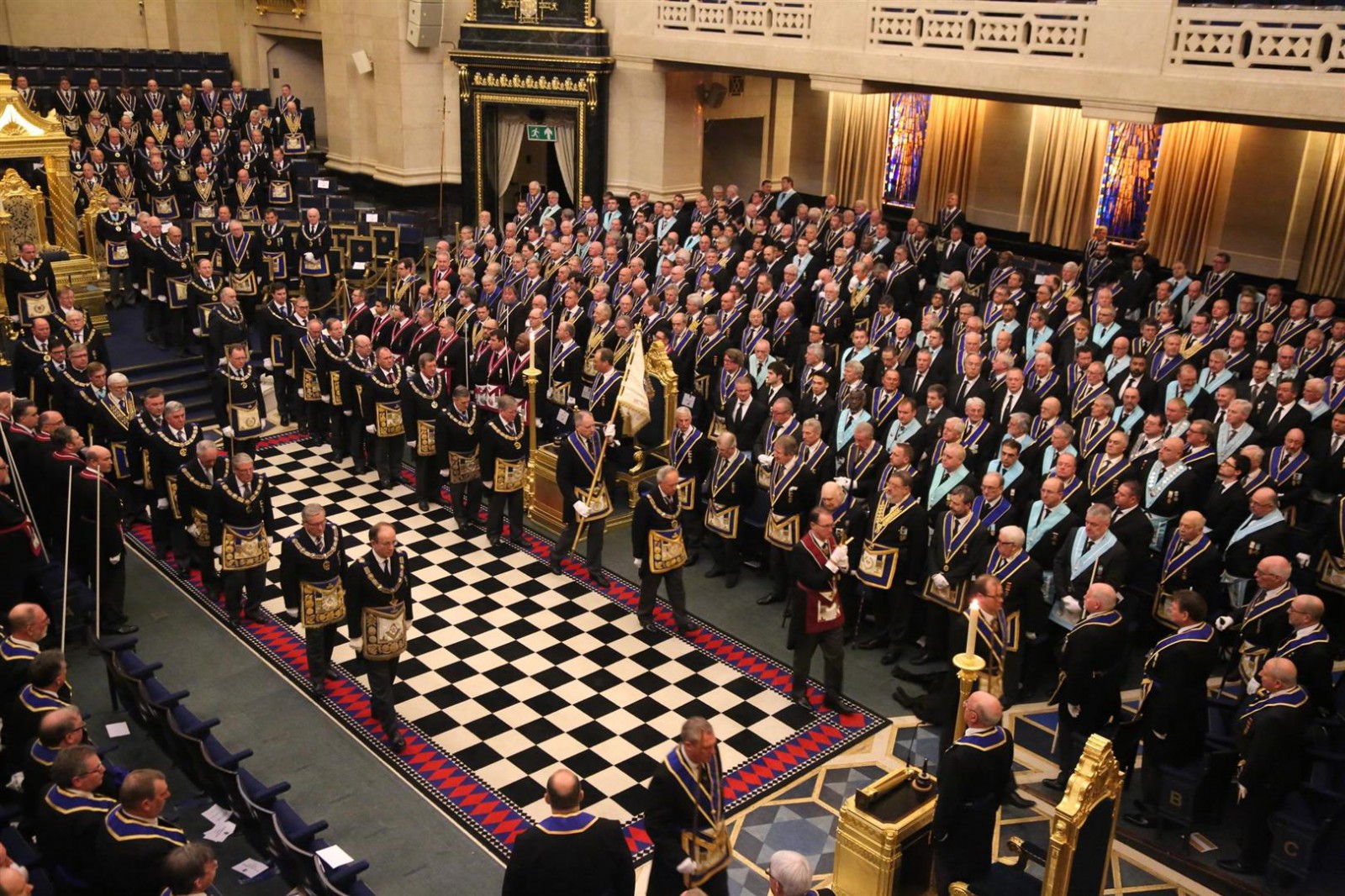
Although the membership numbers have never been vast, Freemasons have been a very influential movement in English-speaking culture for over 300 years. In 1799, concerned about the subversive influence of French revolutionaries, many of whom were Freemasons, the British government began to require all Freemasonic lodges to make an annual submission of their membership lists to the authorities. This obligation continued until 1967, when the then Labour government discontinued it and ordered the lists to be destroyed, an act of shocking vandalism from a historian’s viewpoint. For the past 300 years then, many powerful and influential men in British and American life have been members of masonic lodges, as well as of the slightly more visible gentlemen’s clubs. In British lodges, one does not have to be a Christian to be a member, but one has to acknowledge the existence of a Supreme Being. French Freemasons of the main French masonic system, the Grand Orient de France, by contrast, dispensed with that requirement in 1877; this decision created a schism with British Freemasons which still exists today. The result of this was that many French Freemasons became very involved with politics, whereas in British Freemasonry, discussion of politics or religion has not been allowed in the lodge. Nevertheless, membership of a British lodge brought many men together, and once together as masonic brothers, they could discuss politics outside the lodge. All Freemasons are taught that they are in the light and the uninitiated are in the dark; that is the claimed purpose of Freemasonry: to move from the spiritual darkness of ignorance into the spiritual light of Freemasonry. Obviously, for Freemasons then, and this is clear from the texts of masonic rituals, most human beings are in darkness, and the masonic bands of brothers are in the light. Already in the first half of the 19th century, especially in France, where the revolutionary spirit was still very much alive, there was the aim to create a United States of Europe through masonic connections. British Freemasonry spread throughout the Empire particularly through military lodges. Wherever the British army went, the lodges went with it. Both British and French Freemasons therefore, sought to spread their system around the world; French Freemasonry put down roots which still exist today in the elites of France’s former colonies in Africa.
Cecil Rhodes was dubbed the imperialist ‘Colossus of Rhodes’, but the health of his heart was never good and so, aware that he might not live very long, he made a number of wills throughout his life, eight in all, for the disbursement of his very considerable wealth, which at the time of his death amounted to about £471 million in today’s money. In the first of those wills, written in 1877, when at 24, he was already a millionaire (from mining in Africa) and a student at Oriel College, Oxford as well as a newly initiated Freemason in Oxford University’s Apollo Lodge, he conceived of a secret society for the domination of the entire world by the British Empire. In 1891, he established and funded such a society, which he and his two co-founders called the “Society of the Elect”. After Rhodes’ death in 1902, it morphed into the Rhodes Scholarships and the Rhodes-Milner Group (later, the Milner Group or the Round Table after 1909), funded by Rhodes’ will and donations from Rhodes’ millionaire friends. Led by Lord Milner, it came to wield enormous influence in British foreign policy. In 1916 it even effected a kind of coup in London and replaced Prime Minister Herbert Asquith with David Lloyd George and set up a 5-man War Cabinet, which included Milner, in order to rebuff the German peace moves made at that time and to continue the war until total victory.18 From 1906 until the end of the Second World War, the Milner Group/Round Table was arguably the most significant actor in British foreign policy.19 It failed in one of its major aims – to reunite the UK and the USA into one entity – but today, when Britain has left the EU ‘frying pan’, many in the British elite, whichever the political party, seem only too willing to jump into the American ‘fire’, whoever the US President happens to be.
When the intelligence services and military forces of all the English-speaking countries work in tandem in the so-called “Five Eyes” combination (Israel being “the 6th eye”, as Israel’s Prime Minister Benjamin Netanyahu is on record as declaring20); and when the President of the USA attempts to impose America’s will, or rather, the will of the US elites behind him, on the world in matters of trade and foreign policy, we can see that in effect, the Society of the Elect founded by Rhodes in 1891 has also succeeded in one of its main aims to a considerable degree – the assertion of the English-speaking elites to external world domination. This was borne out yet again in the recent, unprecedented, State visit to the UK by US President Donald Trump. As the slaughter of Palestinians went on in the genocide in Gaza, a slaughter that the US government could end in days if it so wished by pressuring Israel, 160 guests, including many members of the Anglo-American elite and served by 100 waiters at the 47 metre-long table, enjoyed a lavish banquet in St. George’s Hall in mediaeval Windsor Castle and listened to King Charles III and President Trump indulging in the kind of self-congratulatory speeches that have been so common in gatherings of the Anglo-American elite since the late 19th century.

With his usual flair for exaggeration and his usual ignorance of history, Trump said that “the bond of kinship and identity between America and the United Kingdom is priceless and eternal” and that the UK and the USA have done “more good for humanity than any two countries in all of history”! At a similar banquet and to a similar audience, in London in 1917, Arthur J. Balfour, Foreign Secretary at the time and signer of the infamous Balfour Declaration (2 Nov. 1917), a document which has much to do with the origins of the current genocide in Gaza, said to the American guests at the elite transatlantic Pilgrims Society Dinner: “We have not learned freedom from you, nor you from us. We both spring from the same root…Are we not bound together forever? Will not our descendants, when they come to look back on this unique episode in the history of the world [he was referring to the ongoing world war - TB], say that among the incalculable circumstances which it produced, the most beneficent and the most permanent is perhaps, that we are brought together and united for one common purpose in one common understanding – the two great branches of the English-speaking race?….This is a theme which absorbs my thoughts day and night. It is a theme which moves me more, I think, than anything connected with public affairs in all my long experience.”21 The spirit behind these words – and those of Trump at Windsor – was the spirit that motivated Rhodes, who long dreamed of Anglo-American reunion, and under US control if necessary. It is also a spirit that has long united British and American Freemasons.
In May 1918, Sir Alfred Robbins (1856-1931), who was then regarded as “‘the Prime Minister of English Freemasonry’ and was Chairman of the Board of General Purposes of the United Grand Lodge of England [the premier Freemasonic organisation in Britain – TB], first issued a call for the establishment of a Masonic League of Nations, which would bring together the brethren of the English-speaking world. This would serve ‘the peace and welfare of the world’. Then ‘even the war that provoked these thoughts will have had its compensations’”.22 In that same year “Motherland Lodge” No. 3861 was founded in London to foster: “[a] feeling of mutual aid and friendship which has drawn together the Motherland, the Dominions Overseas and the United States in a common struggle for liberty and civilisation […] and to weld together in closer union all the English-speaking people in all parts of the world, and more particularly in all parts of their Imperial Commonwealth.”23
Two years earlier, in France, on 20 May 1916 the Grand Orient of France had announced it would organise a conference of the Masonic organisations of the Allied nations fighting against Germany. This masonic gathering was intended to parallel the Inter-Allied Conference on Military and Economic Cooperation in Paris. The masonic conference duly took place in Paris on 14/15 January 1917 at the headquarters of the Grand Orient. British Freemasons were absent – in line with British Freemasonry’s principle of no politics in the lodge. At the conference “the physiologist Charles Richet (1850-1935) called for the creation of a ‘League of Nations’ (Société des Nations), which the Grand Orient had long had in mind.’ Georges Corneau, president of the Council of the Grand Orient, announced that a further such international congress would take place in the summer of 1917, which would aim to ‘found a supranational authority whose task would be to bring about a peaceful solution to the differences between nations’. U.S. President Woodrow Wilson (who was not a Freemason, but whose ideas were entirely in harmony with Masonic ideals) followed him only a few days later, when on 22 January 1917 in his speech (‘Peace without Victory’) to the Senate he called for a ‘Peace League’ as the guarantor of a stable order after the war.”24 In his opening speech at that summer 1917 conference (28 June), “Georges Corneau reminded the audience that ‘we have often spoken of the United States of Europe’: ‘It is therefore absolutely necessary to create a supranational power, whose objective will not be to suppress the causes of conflicts, but to peacefully eliminate the differences between nations’. Freemasonry, which works for peace, intends to put this new body, the League of Nations, to the test. It [Freemasonry] will be the propaganda agent for this concept of universal peace and universal happiness. This, my most illustrious brethren, is our work. Let us get on with it!” 25 This was clearly no democratic agenda, but one that issued from a more or less hidden group working from behind the scenes, a group that sought to influence events through the manipulation of information and ideas, working down from the elite media and government circles to the mass media and the citizenry in general.
The Round Table group worked in a similar way in Britain. Carroll Quigley of Georgetown University USA, in his extremely detailed study, The Anglo-American Establishment (1949) commented: “When the influence which the Institute [Chatham House, which was founded by the Milner Group in 1920; [see pic below - TB] wields is combined with that controlled by the Milner Group in other fields – in education, in administration, in newspapers and periodicals – a really terrifying picture begins to emerge […] because such power, whatever the goals at which it may be directed, is too much to be entrusted safely to any group. […] No country that values its safety should allow what the Milner Group accomplished in Britain [from c.1910-1955 -TB] - that is, that a small number of men should be able to wield such power in administration and politics, should be given almost complete control over the publication of documents relating to their actions, should be able to exercise such influence over the avenues of information that create public opinion, and should be able to monopolise so completely the writing and the teaching of history of their own period.”26 We have seen recently, with the activities of the World Economic Forum, with government responses to global warming, with western governments’ coercive actions during the COVID years, and with their coordinated response to the war in Ukraine, that the one-sided monopolisation and de facto censorship of information that Quigley wrote about in the 1940s is just as bad, if not worse, today.

Chatham House – The Royal Institute of International Affairs, London
Eugenic occultism and mass migration
In discussing three forms of occultism – eugenic, hygienic and technological – and the geographical areas in the world which ‘specialise’, as it were, in these three areas, Steiner spoke, with reference to ‘eugenic occultism’ in a lecture of 1 December 1918, about how those in the secret circles of the English-speaking peoples know that the intense focus on technology and materialism in western countries would, over time, undermine the life forces and the emotional life of the populations of those countries and produce “soulless populations”. The Anglophone elites therefore sought to ensure, through mixed marriage and mass migration, that people with bodies from the Indian subcontinent would come to the West and continue its population (this would also enable the continued dominance of western elites – TB). In the case of America, he said, this new population would be provided by people with Russian (and presumably Ukrainian) bodies. Needless to say, these intentions were not shared with the populations of western countries! Nor are they today, except in terms of the need for the economic replacement of ageing western workers. In our time, at least in the years before the Ukraine war, one could see online many advertisements by young Slavic women in Russia, Ukraine and Belarus looking for men in English-speaking countries to marry.
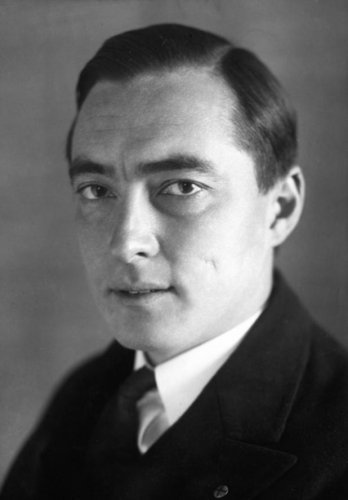
Count Richard Coudenhove-Kalergi
Count Richard Coudenhove-Kalergi (1894-1972), a young aristocrat of Belgian, Greek and Japanese ancestry, who had become a Freemason only a few years earlier, started a “Paneuropa Union” movement in 1923 to create a single Pan-European state, a movement that suddenly attracted huge amounts of money from international financiers and political support from highly placed individuals across Europe including Aristide Briand, three times French Prime Minister, and Winston Churchill in Britain. The Count wrote in his 1925 book Practical Idealism (1925) that mass migration should be encouraged into Europe to create a new European population that would look similar, physically, to the ancient Egyptians and would have a mixed-race elite consisting of Jews married into the traditional aristocracy of Europe; he and his father were both strongly philo-judaic, and he had a Jewish wife. The Depression and Adolf Hitler made Coudenhove-Kalergi’s plans in the 1930s and 40s unfeasible, but in the decades after the Second World War, members of the political and business elites of Europe, including Britain, began to encourage such mass migration – again, the general populations of those countries were not given a chance to express their views on this transformation of their societies through referenda – and by the end of the century, many towns and cities in western and central Europe, even in Scandinavia, no longer looked like they had 50 or 100 years earlier.
In the year 2000 the Population Division of the Department of Economic and Social Affairs (DESA) at the UN released a new report titled Replacement Migration: Is it a Solution to Declining and Ageing Populations? Its general answer to the question was ‘yes’ and can be summed up by this statement from the Report: “Population decline is inevitable in the absence of replacement migration. Fertility may rebound in the coming decades, but few believe that it will recover sufficiently in most countries to reach replacement level in the foreseeable future. […] The numbers of immigrants needed to prevent the decline of the total population are considerably larger than those envisioned by the United Nations projections. The only exception is the United States.” From 2000 onwards, mass migration into Europe and the USA began to increase dramatically. The individual at the UN who was especially identified with promoting migration from 2006-2017 was Peter Sutherland (1946-2018), the Irish, non-executive chairman of Goldman Sachs International, former chairman of oil giant BP, chairman of the London School of Economics, and Special Representative of the [UN] Secretary-General for International Migration.

Peter Sutherland
In June 2012 the BBC reported that “Sutherland told the House of Lords that the EU should ‘do its best to undermine’ the ‘homogeneity’ of its member states, the UN’s special representative for migration has said” and that “migration was a ‘crucial dynamic for economic growth’ in some EU nations, ‘however difficult it may be to explain this to the citizens of those states’…. Peter Sutherland told peers the future prosperity of many EU states depended on them becoming multicultural.”27 (emphasis – TB) In 2018, 11 months after Sutherland’s death, the UN General Assembly formally endorsed the non-binding UN Global Compact on Migration. But the tide was already turning; Chancellor Angela Merkel of Germany had declared in 2010 that multiculturalism had “utterly failed in Germany”. Moreover, this was followed by the migration crisis throughout Europe in 2015-18 during the civil war in Syria and Germany’s struggle to accommodate over a million migrants in 2015 after Merkel had famously declared that “we can manage this” – five years after declaring that multiculturalism had failed! The USA under Donald Trump, struggling to cope with countless numbers of migrants on its southern border, refused to vote for the UN Global Compact on Migration. In the years after 2015, numerous European countries experienced great difficulties in dealing with the challenges of migration, integration, preventing illegal migration etc. Britain has been the latest among them and the nation that has repelled several major foreign invasions over the past millennium seems thus far unable to stop the ongoing invasion by foreigners crossing the channel illegally in rubber dinghies, sometimes as many as 1000 a day! This is because there is no real will to stop or reduce migration, both legal and illegal, on the part of the British and European elites, despite the growing pressure on them to do so coming from ‘below’, from the population. Conservative business interests that seek only cheap labour, and left-wing ideology that harps on about “the brotherhood of man” or “Say it loud, say it clear: refugees are welcome here”, “No borders!” etc., without thinking through the social consequences of an open-door policy, are prominent in the foreground, but in the background are the esoteric aims of western secret societies. “The Great Replacement” of the native populations of Europe by people from Africa and Asia is not some conspiracy theory driven by right-wing nationalists; it is a ‘Great Replacement fact’ that has gradually been pushed forward by western elites for many decades. Steiner drew attention to it over a century ago (1918), as has been indicated in this article. Coudenhove-Kalergi, with his connections to Freemasonry and international financiers, was advocating it exactly a century ago (1925).
Those on the political left or the liberal centre often say that the concern with immigration (“blaming foreign migrants”) is just a right-wing distraction from issues of poverty and social injustice. They point to phenomena such as the recent massive “Unite the Kingdom” rally of ‘patriots’ in London (13 September) in which at least 500,000 turned out (the police claimed it was 110,000, but they invariably undercount the figures of dissident demonstrations (overhead footage clearly shows the massive size of the rally); 5,000 left-wingers demonstrated in protest against the rally. The rally was led and the stage show presented by the self-styled ‘journalist’ Tommy Robinson (real name: Stephen Yaxley-Lennon), but how many of those present knew that he is a pro-Israel activist who has been trying since 2009 to stir up trouble and animus against Islam and Muslims, which serves the Zionist interest? His former organisation, the English Defence League28, of which he was a co-founder, had a name similar to the Jewish Defence League, founded by the ultranationalist politician, rabbi and convicted terrorist Meir Kahane in New York in 1968. The EDL had a Jewish Division 2010-2011. ‘Robinson’ is on record wrapping himself in Israeli flags, standing on Israeli Defence Force tanks in Israel, claiming he would “die for Israel”, and receiving money from Jewish sources such as Ezra Levant of the Canadian Rebel News.

Robinson is a Pied Piper figure who has used people’s anger over Pakistani youth violence and rape gangs in British cities to direct that anger against Islam and Muslims. One of the more obnoxious speakers at the “Unite the Kingdom” rally (although others were not obnoxious) introduced by Tommy Robinson made a point of tearing up Islamist flags and also the flag of Palestine. Many of those in the UK who follow and support Robinson – and this rally was certainly his biggest achievement yet – are not so interested in Israel and Palestine; they are more concerned about the issue of the decline of Britain, their perception that the political elites generally seem not to care about the native population and have consistently failed to solve the issue of migration. Dealing with unwanted illegal foreign invasions, after all, is supposed to be one of the prime functions of government, but recent UK governments have been more concerned to rattle sabres in the direction of nuclear armed Russia than deal with illegal migrants on rubber boats crossing the Channel to the UK.
However, those on the left should perhaps reflect that it was they themselves who from the late 1960s onwards shifted their focus away from their traditional concern for the economic interests of the working class and towards cultural, racial, and gender issues. Moreover, as people on the ‘Left’ tend to be averse to anything of a non-scientific, non-materialist nature, they are often unaware of esoteric factors in history and deeply suspicious of anything they claim is ‘conspiratorial’ or ‘mystical’. But in many cases, their claims are based on ignorance of historical fact. They have not read the relevant books and studies or they depend for their information on so-called ‘respected’ media channels, which are invariably controlled by the Establishment and represent its interests, the Establishment being a creature with two wings, left and right. In Britain, for example, these media channels include the BBC, Channel 4 TV, The Economist, The Guardian, all left-leaning, and The Times and the Daily Telegraph leaning right.
Some argue that concern over immigration goes against ‘Michaelic cosmopolitanism’ and is contrary to Steiner’s many known strictures against nationalism29, or is even un-Christian. But here again, the above-mentioned ignorance of historical and spiritual-scientific fact may apply. Christianity is in its essence certainly supra-national, beyond nations, tribes, clans and blood bonds, but we cannot hope to require people in a forceful way to give up those bonds all at once. Force is what violent revolutionaries resort to, whether of left or right. In ancient times, such as Europe in the days of Charlemagne (8th/9th centuries), people were often forced to accept Christianity at the point of a sword or made to do so because their tribal or clan lord or king had converted. In such cases, the population often remained pagan at heart and only nominally Christian. It is surely not an accident that the Danish and Norwegian Viking assaults against western Europe in the 9th century followed the efforts of Charlemagne and his predecessors over previous decades to convert by violence the pagan tribes – Frisians and Saxons – who lived south of pagan Denmark. The Vikings may well have realised that the ‘Christians’ were coming for them and launched pre-emptive attacks. Nationalism, patriotism, or any other attachments to groups cannot be overcome by forcing them, from on high, to give ground, or by condemning or insulting their political supporters who may number in the millions, as the British Prime Minister Keir Starmer has recently done by labelling Nigel Farage’s Reform UK party (currently well ahead in opinion polls) as “an enemy ….detrimental to our country” (27.9.2025). In our modern individualist age, coming to accept Christ needs to happen one heart, one consciousness, at a time – through the individual’s own realisation. This is one reason why our age is so inevitably conflicted, because real progress, change in the heart, necessarily takes time.
Conclusion
We are only 600 years into this modern epoch, which began in the 15th century with the Renaissance and the challenge to the authority of the Catholic Church in England, Bohemia and later, Germany. Each epoch lasts 2160 years, in accordance with the precession of the equinoxes in relation to the Zodiac, so there are still some 1500 years of this epoch to go. Most people concerned about social change either do not know of or do not accept reincarnation, so if they think about these matters at all, they are, shortsightedly, in a hurry; they want to see swift and radical change now, in their single lifetime. Others are also ‘in a hurry’, feeling that radical change has to happen in the current Age of the Sun Archangel Michaël, before the Age of the Saturn Archangel Oriphiel begins towards the end of the 22nd century. Ages of Oriphiel are invariably harsh and strenuous. The last one was from c.200 BC to c. 150 AD. Such a sense of urgency can lead to an imperiousness towards and impatience with those who still need what they feel to be the comfort of nation, tribe, or clan. It can lead to a desire for large, all-embracing supranational authorities like the UN and the EU to make decrees and ordinances to accelerate the pace of change faster than the majority can cope with. We need to move forward together carefully, slowly and lovingly in no spirit of political hostility. A threefold, Christian, Michaelic spirit will not seek to abolish cultural and national diversity but to enrich it through the support and affirmation of the autonomy of individuals and of the three spheres of society: culture, politics and economy.

In the words of Karl Heyer (1888-1964, above), anthroposophical historian and esoteric pupil of Rudolf Steiner from 1911:
“In passing through many lives on earth, the human being incarnates in various peoples. He therefore belongs in his innermost being to no one people but only to humanity as such. On the other hand, his incarnation in each particular people would be meaningless if, through each one, he could not develop other sides of the whole human being, which appears on earth differentiated in the various nuances of the peoples. This is the value that incarnation in a particular people has for the ‘I’ [the essential Self and spiritual kernel of the human being] and on this value is based the obligation of the ‘I’ to the people into which the wisdom of karma has placed it. With the very recognition of reincarnation and the law of destiny as such, every one-sided ‘nationalism’ that negates humanity is, in principle, overcome just as every one-sided abstract and vague ‘internationalism’ that negates the differentiated peoples and cultures is also overcome.”30
Notes
1. Christoph Lindenberg, Rudolf Steiner – Eine Chronik 1861-1925, (1988), p. 541.
2. The National Socialists stood in the federal elections under the name National Socialist Freedom Party.
3. Rudolf Steiner in 1918, quoted in A. Bracher (Ed.), Kampf um den russischen Kulturkeim (The Struggle for the
Seed of Russian Culture), pp. 343-344.
4. See Rudolf Steiner, Preparing for the Sixth Epoch (15 June 1915, Düsseldorf): https://rsarchive.org/Lectures/19150615p01.html
5. See n. 4 above.
6. R. Steiner lecture of 3.11.1918, in From Symptom to Reality in Modern History (Collected Works) GA 185, Lecture IX.
7. For those ideas, see his book on them published under the English title Towards Social Renewal (Temple Lodge Publishing, 1999).
8. The term Gleichschaltung (gleich – same, schaltung – circuit) came from the electrical engineering industry and referred to a system in which switches on the same circuit were all switched on by a master switch.
9. From the writings of the esotericist Abbot Johannes Trithemius of Sponheim (1462-1516): De septem secundeis id est intelligentiis sive spiritibus orbes post deum moventibus, c. 1508, publ. 1515 (The Seven Secondary Intelligences, or spirits, who move the spheres in accordance with [the will of] God).
10. Some 10 million lives were lost in the Russian Civil War 1917-1922. Some 140,000 of them died in the “Red Terror” imposed by the ‘Cheka’ (Bolshevik secret police) from Sept. 1918. See: https://www.britannica.com/event/Russian-Civil-War/Foreign-intervention
11. See Rudolf Steiner, The Archangel Michael – His Mission and Ours (Anthroposophic Press, 1994)
12. Taylor was very prejudiced against German culture, but he did not blame the Germans for starting the two world wars.
13. Fabian Society – founded in 1884, promoted a programme of gradualist state socialism. From it came the London School of Economics and many socialist leaders in the British Labour Party, including Tony Blair and Gordon Brown. It adopted as its symbol the wolf in sheep’s clothing.
14. https://en.wikiquote.org/wiki/Arnold_J._Toynbee
15 632 – the death of the Prophet Mohammed; 1683 – the defeat of the Ottoman Turks at the siege of Vienna.
16 Steiner dated this Age from 1413 to 3573. It corresponds to the astrological Age of Pisces, which began astronomically i.e. ‘in the heavens’ in c. 215 AD but culturally and historically (on earth) in 1413. See R. Powell, Hermetic Astrology Vol. 1 (1987) pp.55-66.
17 ‘Anglo-American elites’ here includes the elites of Canada, Australia, New Zealand and (white) South Africa. Since the 1960s, it would also include the elites of the main client states of the English-speaking countries.
18 See Carroll Quigley, “The Anglo-American Establishment – From Rhodes to Cliveden” (written 1949, published 1981, Books in Focus), chap. 8.
19 See Quigley, op. cit., chaps. 5-13.
20 https://demstate.com/watch/video-netanyahu-declares-israel-as-sixth-eye-in-global-intelligence-network
21 K.M. Young, Arthur James Balfour p.385.
22 Dr. Markus Osterrieder, Welt im Umbruch (World in Upheaval)(2014), p. 1285-6.
23 Osterrieder, op. cit., p. 1285.
24 Osterrieder, op. cit., pp. 1281-2.
25 Osterrieder, pp. 1282-3.
26 See Quigley, op. cit. p. 197.
27 https://www.bbc.co.uk/news/uk-politics-18519395
28 Formerly known as the English & Jewish Defence League. See https://find-and-update.company-information.service.gov.uk/company/07678022
29 See Karl Heyer (ed.): Rudolf Steiner über den Nationalismus – Geisteswissenschaftliche Hinweise, Perseus Verlag, Basel, 1993.
30 Karl Heyer, op. cit., p. 17.