

The Club of Rome and Anthroposophy
Posted by Terry Boardman on Nov 12, 2026 in most recent, nwo, Uncategorized | 0 commentsThis article was first published in New View magazine #121 Autumn 2026 with the title:
“The Club of Rome and Anthroposophy: Between the Spectre and the Nightmare”
“Ah love! Could thou and I with fate conspire, to grasp this sorry scheme of things entire, would not we shatter it to bits and then, remould it nearer to the heart’s desire?” - Words from the stained glass window of the Fabian Society, originally from The Rubaiyat of Omar Khayyam, transl. by Edward FitzGerald


The Fabian Society window (1910), designed by George Bernard Shaw
and a close-up of the original Fabian Society wolf-in-sheep’s-clothing emblem
shown on the window, above the globe being hammered by Shaw and Sidney Webb
[wikipedia]
“The Club of Rome” – the clue is in the name. What is a “club”? What is “Rome”? What is this particular “Roman” club? Does it really have anything to do with Anthroposophy? How are these two between the ‘spectre’ and the ‘nightmare’. I’ll come to these questions later.
First, let’s consider the ‘spectre’ and the ‘nightmare’. These refer, Rudolf Steiner tells us1 – and it’s not hard to confirm it for ourselves – to the different images of the human being that lurk unconsciously in people in the West and the East respectively and which he said in 1918 would become an enormously important question in the future – for example, in our time today, because these images inform the deep-rooted conflict that has developed between America and its allies and satellites and Russia and China and their allies and satellites. What appears in the western unconscious, he says, is something like a hallucination, an external perception. I would add that it is more or less clearly perceived, more clearly by certain members of the elite, less so by most of the population. Steiner calls this hallucination a spectre, or a ghost, which comes from the past and is not suitable for the present, but it nevertheless possesses western people in their unconscious minds. It is the spectre or ghost of ancient Rome, which he calls ‘Romanism’. It has a double character, he says, both light and dark, and it seems to me, that it possesses the minds of western elites in particular because it signifies for them light, power and civilisation; it possesses the minds of the non-elite majority population in the West because it signifies for them the force of security and authority which provides ‘the rules’ that make them feel secure in an uncertain world, even though they do not really know where this authority comes from – its origin is dark for them - but the Roman spectre informs them unconsciously that this authority exists, and that provides a certain security in the western world which has convinced itself ‘intellectually’ that life is a Darwinian ‘struggle for existence’.
There is a scene in the movie “Gladiator” (2000) in which the tired old Roman Emperor Marcus Aurelius in 180 AD, longing for peace after 20 years of war, says to the Roman general Maximus after yet another victorious battle against barbarians: “Look at that map. It’s the world which I’ve created …. four years of peace in 20 and for what? I’ve brought the sword.” Maximus speaks about all his dead soldiers lying outside and says: “I will not believe that they fought and died for nothing. They fought for you, for Rome.” The emperor then asks, half in despair: “What is Rome?” Maximus replies: “I’ve seen much of the rest of the world. It is brutal, and cruel, and dark. Rome is the light.” Marcus Aurelius responds: “Yet you have never been there. You have not seen what it has become.” He goes on to speak of the state of corruption that is Rome and asks Maximus to return Rome to what it was, saying: “There was once a dream that was Rome … no more than a whisper, it was so fragile.”

Emperor Marcus Aurelius and general Maximus
Marcus Aurelius wants Maximus to restore Rome to “her true self” – the Republic - the dream of the past. He he not Commodus his own son, who “is not a moral man”,He wanted to bring the past back into the present, for he had no vision of an alternative present other than the restoration of the past, rather like the current British rightwing politician Rupert Lowe, whose party is called “Restore Britain” – but which Britain, from which past? The same can be said of Donald Trump’s MAGA movement: Make America Great Again – but which “Great America”? So, as the third millennium dawned, Hollywood, all too clearly with the USA and Washington DC in mind, gave to the world a movie about the restoration of the “dream that was Rome”, because Rome had become corrupt, and everyone knew it.
And yet in those years after the much-trumpeted ‘end’ of the Cold War, in the brief era of America’s unipolar hegemony (1991-2001) a confident “new imperialism” was in the air, talk of a so-called “liberal imperialism” frequented the think-tanks and Press editorials of Anglo-America. As British Prime Minister Tony Blair’s chief foreign affairs advisor Robert Cooper put it in his book The Post-Modern State (2002), not so diplomatically: we must “get used to the idea of double standards. Among ourselves, we operate on the basis of laws and open cooperative security”, but we “should not forget that in other parts of the world the law of the jungle reigns.” And “when we are operating in the jungle, we also must use the law of the jungle”. This means that when dealing with the “more old-fashioned kinds of state outside the postmodern continent of Europe, we need to revert to the rougher methods of an earlier era—force, pre-emptive attack, deception, whatever is necessary for those who still live in the 19th century world of every state for itself”.2 This relates to the “nightmare” that Steiner spoke of in his 1918 lecture mentioned above. For if the minds of the people of the West are unconsciously haunted by the ghost or spectre of the Roman past, the unconscious minds of the people of the East – of eastern Europe, Russia and Asia – are oppressed, Steiner maintains, by a present “nightmare”. This is because the eastern peoples’ time has not yet come; since the 16th century, when the rest of the world was ‘discovered’ by European explorers, conquistadors, merchants and missionaries, the world has been living in the age of first European and then American domination (for the USA emerged from Europe).
This is the present situation, the age of materialism, of intellectualism, and of the lower ego, all of which, Steiner often explained, have had to be developed in the course of the evolution of consciousness, but these are not supposed to continue in the distant future, from the 4th millennium. Just as the consciousness of the Greco-Roman age gave way to something else after the 5th century AD, when the Roman Empire finally collapsed in the West, so will the age of materialism, of intellectualism, and of the selfishly centred ego give way to other values. Indeed, the process has already begun on a small scale, as we see the materialism, intellectualism, and lower ego that have been dominant since the 16th and 17th centuries being challenged in various ways. It will be the East that will lead the way into the future epoch, but what is developing in the East currently appears as a nightmare for the peoples of the East, Steiner says, “because the instincts that are nourished in the East and become effective in the determination of this image are nourished by a force that …will not reach its highest level until after the 4th millennium”,3 and this force in the East requires an impulse that works instinctually, to support its development, and it is this instinctive impulse in the unconscious mind of Eastern peoples that constitutes the nightmare for them. The effect of this nightmare, says Steiner, will precisely enable the people of the East to free themselves from the nightmare, so that when they wake up from the nightmare, they will recognise clearly what has happened, just as we do when we have a nightmare and wake up to it. What is this nightmare for the eastern peoples, then? “It is the forces, the undertakings, proceeding from the British Empire”4, says Steiner. And the USA of course proceeded from and has succeeded to the British Empire.
So the peoples of the West unconsciously perceive a Roman spectre from the past and act in the present in accordance with it, and in doing so, they make the peoples of the East feel that they, the Easterners, are oppressed by a nightmare in the present, a nightmare which nevertheless enables the Easterners, in awakening from it, gradually to develop the forces that they will realise in the future for the sake of all humanity. “The British-American impulse toward world empire that is in process of preparation and is active in the present epoch [i.e. since the 17th century – the time of the emergence of natural science, the global East India Company and the English settlement of North America] manifests itself as a nightmare, as the nightmare counterforce in order that the peoples of the East may awaken to a conscious and adequate image of the human being. It is not pleasant to state these things at the present time, to listen to them is equally unpleasant. The simple truth is, however, that we have arrived at an epoch in the evolution of world history when nothing can be achieved unless people take cognisance of the things in the world on the basis of their knowledge, their full consciousness, and really acquaint themselves objectively with what exists in the world. No progress can be made in any other way.”5
If we look around us at the colossal events occurring in today’s world, for example, the ongoing struggle by the Anglophone West (the so-called G7 countries and their satellites in Asia and Australasia) to maintain its unipolar, “full spectrum dominance” against the gradually emerging multipolar entity of the East and South led by China and Russia (the ‘BRICS’ group, now comprising Brazil, Russia, India, China, South Africa, Egypt, Indonesia, Iran, United Arab Emirates and Ethiopia) we can recognise clearly the spectre haunting the West – the West which nevertheless always feels, like Maximus, and as we can hear in the speeches of Ursula von der Leyen, Emmanuel Macron, Mark Rutte and one US President after another, that it itself is “the light” while yet being unaware of how rotten and corrupt it has actually become – and the nightmare by which the East (e.g. Russia, Iran, China) feels oppressed by that Western spectre in the indignant speeches of the representatives of countries such as China, Iran, Russia and many others. This is not a prescriptive judgement that Steiner made, but simply a description of what was going on in the world in 1918 and still is today in 2026, for these are gigantic and profound forces at work within human history and development.
Donald Trump is only the most recent and the most extreme example of the fact that ‘the West’ behaves like a mad king who believes himself to be in the light but who is possessed by a memory from the past which the majority of the population of the West does not clearly recognise; it is in fact something that has possessed the West for several centuries already and will likely do so for centuries more before the majority of Westerners wake up to it, but the mad king’s behaviour is actually needed by the East so that it can wake up to its true developmental task. Needless to say, that ‘waking up’ does not mean ‘obeying and going along with’ but, for the most part, resisting and where possible, cooperating.

The Economist magazine, a journal that since the 1930s has stood for the imperial hegemony of ‘the West’, recently (30.8.2026) carried a good example of the easterners’ ‘nightmare’, although it misinterpreted it – an aggressive article entitled ‘Cornered, Vladimir Putin plans to escalate his war – His refusal to back down is rooted in Russia’s gangster politics’ : “On August 29th at a university in Moscow, Vladimir Putin observed that orcas feed on polar bears. ‘That’s the food chain’, Russia’s president stated. ‘Children should be taught about this, so that they understand what kind of world we live in and why we are conducting the special military operation’—i.e, Russia’s war on Ukraine. The claim was fanciful: there is no known case of an orca eating a polar bear. But it provided insight into the Russian president’s predatory worldview.” On the contrary, it provided insight into a) The Economist’s hatred of Russia and Putin, and above the article’s title were the words: “Europe | An Orca-eat-bear world” b) Putin’s understanding of the Social Darwinist dog-eat-dog/orca-eat-bear nightmarish philosophy of the West; Putin was saying in effect, ‘Russians should be aware of what we’re up against – an aggressive culture that seeks to destroy us’, and c) far from providing “insight into his predatory worldview”, it showed Putin’s keen understanding of history and The Economist’s historical ignorance – in the 19th century, the British and Russian Empires were represented in the Press and elsewhere as ‘the whale and the bear’ respectively, who were opposed to each other in what, from 1840, the British called “the Great Game” – the struggle for domination in Asia. Putin substituted for a regular whale the more aggressive and predatory orca (killer whale) to symbolise the ‘predatory’ West (US/UK) which has been aggressive against Russia since 2014 (the violent Western-backed Maidan coup in Kiev by neo-fascists from western Ukraine).
Clubs
A club: “the sense of a ‘company of persons organised to meet for social intercourse or to promote some common object’ (1660s) apparently evolved from this word from the verbal sense ‘gather in a club-like mass’ (1620s), then, as a noun, ‘association of people’ (1640s).”6
As religious enthusiasm declined across western Europe in the 18th century while populations grew along with the size of towns and cities, a new social sensibility emerged in which people sought to meet each other in non-religious social contexts. It was the age of coffee houses, ladies’ salons, gentlemen’s clubs and Freemasons’ lodges, new associations of all kinds. Many of these new social groups were open and visible; others were private, or secret and conspiratorial; in some of them, sinister and far-reaching social and/or cultural changes were planned and plotted. From 1700 to the end of the First World War, Freemasons’ lodges were arguably the most significant places in which members of the elite met secretly, but since that war, there has been a considerable downturn in membership of such lodges as the prestige of Freemasons in western society gradually declined and governments of most shades put pressure on them. Interest in the esoteric symbolism of Freemasonry, which was a strong feature of the post-Renaissance atmosphere of religious conflict in Europe in which Freemasonry emerged, also fell away during the 20th century. What increasingly replaced Freemasonic lodges as meeting places for men, especially men of the elite, were gentlemen’s clubs in the 19th century, again in the Anglophone world, and in the 20th century, think-tanks of various kinds developed, which were devoted, unlike Freemasonic lodges, explicitly to political and business purposes, notably those of an international nature such as Chatham House, the Bilderberg Group, the Trilateral Commission etc., all founded by members of the transatlantic elite. The Club of Rome joined this select group of institutions in 1968. More on that Club later, but for now, it was founded in Rome because one of its two founders was Italian, the industrialist Aurelio Peccei and because the first meetings were held in Rome. But as we shall see, and in view of what Steiner said about “the ghost of Rome”, the name of the club was not perhaps an accident.
“Limits” and Malthus
Before approaching the Club of Rome and its extremely impactful report, Limits to Growth (1972) the key notion of limits should lead us to consider briefly a man whose concept of ‘limits’ has seeped into many environmentalists’ minds over the last two centuries – the English cleric, economist and scholar Thomas Malthus (1766-1834). The cynical, gravity-bound and essentially materialistic thinking of the 18th century, in which Italy and Rome were very much in fashion, thought much in terms of ‘limits’ and formal structures. Malthus’ famous book An Essay on the Principle of Population (1798), which could be regarded as the origin of the study of demography, was written in answer to the idealistic book Political Justice by the Enlightenment era English radical, William Godwin. Both Charles Darwin and H.G. Wells regarded Malthus as a hero. Wells wrote in his Anticipations (1901): Probably no more shattering book than the Essay on Population has ever been, or ever will be, written. . . . [I]t made as clear as daylight that all forms of social reconstruction, all dreams of earthly golden ages must be either futile or insincere or both, until the problems of human increase were manfully faced.”7

Thomas Malthus 1834
Malthus argued that Godwin’s idealism was utopian and would always be contradicted by the reality of nature. He argued that population growth, which he said increased ‘geometrically’,8 would outpace food supply, which increased ‘arithmetically’, leading inevitably over time to famine, that nothing could be done to avoid this, and that it was best to allow nature to take its course and naturally correct overpopulation through famine, war, disease etc. Malthus’ hard-headed and callous ideas advocating minimal or zero intervention by external forces (by government action, charitable groups etc. – i.e. by the exercise of human reason) in times of famine in India and Ireland and increased poverty caused by industrialisation in Britain influenced government inaction in the 19th century and had terrible effects in India, Ireland and Britain. A lack of sympathy with the lower classes combined with fear of revolution after events in France in 1789-1794 led to much hard-heartedness on the part of the British authorities in general in the period 1750-1850 despite the abolition of slavery (1807-1833: black slaves in the Caribbean were in any case often replaced by indentured labour from other parts of the Empire). It was a time of great severity towards children and the insane and very harsh punitive discipline of men in the British Army and Navy. In all such cases, Roman practices, familiar to those educated in the classics, were widespread. Materialism (Malthus said that food and sex were “the two principal hungers that nature has instilled in man”), statistics and the spirit of calculation had risen to a peak throughout the West in the mid-19th century, and the Communist Manifesto appeared in 1848.
Charles Darwin’s view of evolution, On the Origin of Species, (1859)9 by natural selection was inspired by his reading, 40 years later, in September-December 1838, of Malthus’ ideas in his 1798 book on human population. Darwin writes in his Introduction (pp. 4-5): “[T]he Struggle for Existence amongst all organic beings throughout the world . . . inevitably follows from their high geometrical powers of increase. . . . This is the doctrine of Malthus, applied to the whole animal and vegetable kingdoms. As many more individuals of each species are born than can possibly survive; and as, consequently, there is a frequently recurring struggle for existence, it follows that any being, if it vary however slightly in any manner profitable to itself . . . will have a better chance of surviving, and thus be naturally selected.” Darwin’s idea of natural selection was soon adopted by the British polymath Herbert Spencer (1820-1903), redubbed “the survival of the fittest” and applied to the social sciences in what came to be called “Social Darwinism”, which bred crude supremacist views about racial, ethnic, social and imperial hierarchies in the last third of the 19th century, in which ideas about the animal realm were transposed to the human. In an atmosphere of growing social, national, imperial and capitalist competition for resources, Malthus’ own more pessimistic views about overpopulation and food resources faded somewhat in the 19th century due to the scientistic optimism that resulted from the Industrial Revolution and eventual technological developments such as the large-scale production of artificial ammonia-based fertilisers which greatly increased food production. However, the materialist lack of imagination and callousness towards one’s fellow human beings that underlay Malthus’ views continued to spread and contributed to Social Darwinist10 social and racial thinking in Britain and America in the late 19th century based on the ‘science’ of eugenics, founded by Francis Galton (1822-1911), Charles Darwin’s cousin.
Neo-Roman imperialism
Imperialist and socially conservative thinkers were concerned about three things at that time: the possibility of Marxist revolution by the lower classes in the West; the excessive growth of urban development and of the population of the lower classes and ‘the unfit’, who were seen by eugenicists to ‘breed irresponsibly’; and the rise of non-white, nationalist and anti-colonialist populations against their white masters. These materialist concerns grew alongside another phenomenon on both the political Right and Left - the boundless arrogance of Anglo-American elites in the period 1870-1920 who, influenced by Social Darwinist and eugenic notions of racial and ethnic superiority and by the successes of the British Empire and the American Republic, considered that only they could organise and govern the future of the world, whether through the continued dominance of the British Empire and Commonwealth (a conservative fantasy after the First World War) or through Anglo-American liberals’ dreams of US and UK-led international organisations such as the League of Nations (1919), The Council on Foreign Relations (1921) in the US and its sister organisation, The Royal Institute of International Affairs (Chatham House, 1920) in the UK. These Anglo-American organisations have consistently pursued the goal of world government, or ‘governance’, as they like to nuance it, as can be seen, for example in the writings of two of their 20th century champions, Prof. Arthur Toynbee in Britain and David Rockefeller in the USA. Such world government was, of course, to be ‘steered’ by men like themselves, even if the faces of its public figureheads were brown, yellow or black and had non-English-sounding names. Here too was ‘the ghost of Rome’ at work: the conviction that only a certain set of ‘values’ deserved to rule the world. These values were those of the English-speaking culture that privileged natural science, the laws of property and the interests of financial oligarchs who operated behind the curtain of democracy, as Rudolf Steiner pointed out in 1917: “Financiers were usually imagined to be the enemies of democracy…but this was a fundamental error. On the contrary, they run democracy and encourage it, for it provides a screen behind which they can hide their methods of exploitation, and they find it their best defence against any objections which the populace may raise.” 11
It is very important that we keep in mind at all times when exposed to events reported in the media that there are small groups of powerful and influential men linked with each other, in ‘clubs’ linked with other ‘clubs’, in elite think-tanks and seminars, who are constantly pushing in countless ways, large and small, through all the avenues of society and culture, towards the ultimate goal of one world authority that will be ruled over by a small elite assisted by so-called ‘artificial ‘intelligence’: Senatusque Intellectus Artificialis Americanus – the ‘SPQR’ of our time.12 These are the people who the American scholar C. Wright Mills called “the Power Elite – a group of men, similar in interest and outlook, shaping events from invulnerable positions behind the scenes.” They meet in groups and ‘clubs’ like the Council On Foreign Relations, Chatham House, the Bilderberg Group, the Trilateral Commission, the Group of Thirty, the Club of Rome, which are less visible to the public than the well-publicised gatherings at the annual World Economic Forum meetings in Davos, Switzerland.
The 20th Century Neo-Malthusians
A neo-Malthusian perspective emerged after the shocking disasters of World War II, in the immediate postwar context of the A-bombs, the founding of the UN in 1945, and the beginning of the Cold War in 1947. In 1948 two best-selling books appeared in the USA by two American conservatives influenced by the Conservation movement in the USA in the 1890s-1914 era - biologist Henry Fairfield Osborn, whose father of the same name was a prominent paleontologist and eugenicist, published Our Plundered Planet and his conservationist friend, William Vogt, published Road to Survival.
Notably, the two authors shared the idea that global poverty and troubled international relations were caused by the pressure of population on fundamental resources to satisfy human basic needs. In fact, as Osborn stated in 1948, for ages man “has been destroying the sources of his life”, and that was causing a worldwide shortage of arable land compared with the “unprecedented” growing numbers of people: “another century like this”, Osborn was sure, “and civilisation will be facing its final crisis”. Resources are not “illimitable”, thus “the pressure of increasing populations” was the most urgent problem humanity had ever faced.” (Osborn 1948, 37-41).13
The essentially materialistic thinking of the 18th century which thought, as was mentioned earlier, in terms of limits to knowledge’ (Kant), limits to political rights (Burke*), and limits to food and natural resources (Malthus) was now in the mid-20th century transferred to global ecology: “The concept of limit was here applied to humanly produced resources, rather than to natural resources per se [as with Malthus], thus signalling the social determination of the concept of ‘nature’.”14 In the doom-laden post-1945 pessimism of the era of the atom bomb, Vogt and Osborn denied that the seemingly all-powerful engine of American capitalism would be able to drive enough development to sustain the global population or that western prosperity could be universalised. “The only space left for political action,” they argued, “was to prevent other countries to get to the same level of resources’ exploitation reached by Western civilisation.” Vogt and Osborn did not see environmentalism in a nationalist sense, aiming to preserve local landscapes and resources, as in the earlier Conservation movement; for them, environmentalism had to be seen on a global scale and was intended “to advance a specific political doctrine of the international division of wellbeing”. (emphasis – TB) They argued that “unless population control is included, other means to save the world are certain to fail” (Vogt 1948, pages 284, 264). “…western prosperity was to be evaluated in relation to its overall costs, and its level of depletion of limited resources was leading to a future of doom which could not be repaid, unless other countries were prevented from getting to the same level of wellbeing.”15 There were not enough resources for the growing global population, they felt, and they preferred that the more ‘advanced’ societies should maintain their advantageous position.
For a short time, in the 1950s and early 1960s, their arguments seemed eclipsed by the greatly increasing general prosperity in capitalist countries, when economic growth, driven by the American economy, was the watchword, but by the mid-1960s, the mood among influential sections of the global elite, for example in the Organisation for Economic Cooperation and Development (OECD), had shifted back again to anxiety and concern about growing “Third World” independence, perceived setbacks to US power (Vietnam, civil rights, immigration, the growing Soviet technological challenge, the ‘revolt of the younger generation’). Neo-Malthusian ideas of environmentalism such as those of Vogt and Osborn reappeared in the work of a new generation of alarmists, Americans such as ecologist and rightwing political activist Garrett Hardin (1915-2003), and Stanford University biologist and environmentalist Paul Ehrlich (1932-2026) on the liberal pro-Big Government Left, and their writings: Hardin’s The Tragedy of the Commons (1968) and Ehrlich’s The Population Bomb (1968, co-written with his wife Anne; she was not credited on the book’s cover). These two men and their books and media appearances had a huge impact; their ideas were relentlessly pushed into the public mind in the late 1960s and early 70s. The themes common to both books were those of scarcity, overpopulation and the limits of natural resources and that these issues could only be dealt with drastically through such measures as abortion, compulsory limits on family sizes (Ehrlich), and other compulsive measures, including the substantial reduction of the welfare state (Hardin).

Many of Ehrlich’s predictions turned out to be absurd; his 1968 bestseller, The Population Bomb, began with the sensationalist statement: “The battle to feed all of humanity is over. In the 1970s hundreds of millions of people will starve to death in spite of any crash programs embarked upon now. At this late date nothing can prevent a substantial increase in the world death rate”; the book also included this statement in its Prologue: “We must have population control at home, hopefully through a system of incentives and penalties, but by compulsion if voluntary methods fail. … Programs which combine ecologically sound agricultural development and population control must be established and supported in underdeveloped countries.” Ideas like Ehrlich’s would contribute to the catastrophes in India and China in the 1970s: “India’s “Emergency” period from 1975-77 subjected an estimated 8 million people to sterilisation under conditions ranging from financial inducement to outright coercion. China’s one-child policy was enforced through fines, forced sterilisations and compelled abortions for nearly three decades.”16 “The “bomb” analogy came from a 1954 pamphlet by Hugh Moore, a businessman influenced by Guy Irving Burch, an anti-immigrant eugenicist.”17
Hardin based his argument on an 1833 English case of the abuse of common land in England: “Therein is the tragedy. Each man is locked into a system that compels him to increase his herd without limit – in a world that is limited. Ruin is the destination toward which all men rush, each pursuing his own best interest in a society that believes in the freedom of the commons. Freedom in a commons brings ruin to all.”18 This Malthusian argument is easily countered and has been subject to countless critiques. It is an argument that is locked into the view of the selfish, egotistical individual who has few or no moral values and whose behaviour is unswayed by any religious ethics, and it assumes that this is the normal human state, whereas in fact, as Rudolf Steiner often pointed out, this egotistical individualism developed together with materialistic natural science in European societies after the mid-17th century; it is not any human or European ‘norm’.
The Club of Rome
Today’s climate change and Net Zero agendas, constantly held before us by the corporate media, owe a great deal to these men’s neo-Malthusian views of limited resources and human overpopulation. Why then did the influence of men like Vogt, Osborn, Hardin and Ehrlich make such an impact from the 1940s until today? It was because of the way in which their views were injected into the minds of the public through the globally coordinated media, and that happened through the connections between the views of these men and certain ‘behind-the-scenes’ organisations, ‘clubs’ if you will, the most important of which was the Club of Rome, founded in 1967 in Rome by two men, the British chemist and OECD19 bureaucrat Alexander King (1909-2007) and the Italian industrialist Aurelio Peccei20 (1908-1984) of FIAT and Olivetti. By ‘behind the scenes’ I do not mean to say that the Club of Rome was ‘secret’, but it was, especially in those early years, very ‘private’, as some ‘clubs’ can be, especially those whose members are very wealthy and in positions of considerable influence.


Aurelio Peccei (l.) (1976) and Alexander King (r.) (c.1987)
[wikipedia]
Alexander King had been the Head of the UK Scientific Mission and Scientific Attaché at the British Embassy in Washington DC during the war and after the war was Chief Scientific Adviser to the right-wing Labour politician Herbert Morrison and to the UK government’s Department of Scientific and Industrial Research. In 1957 he became the Director-General for Scientific Affairs at the OECD. Here he evidently came to share the pessimistic and very conservative ideas of Vogt and Osborn. Let us listen to the views of King himself, given in an interview on 23.6.1981, nine years after the publication of the Club of Rome’s Limits to Growth Report.21 Speaking about global demographic changes he said: “The Soviet Union is now threatened by becoming an Asian-Islamic nation”. He spoke about his close relationship with the Soviet sociologist, philosopher and scientific bureaucrat Dzhermen Gvishiani, son-in-law of the Soviet Prime Minister Alexei Kosygin. Gvishiani headed the IIASA [the Vienna-based International Institute of Applied Systems Analysis] and was a member of the Club of Rome; King: “By the year 2050, the present developed countries, including the Soviet Union, will be down to 15% percent of the world population. It is an alarming prospect. … The thing to be feared is that the white world as we know it, including the U.S.S.R., could become a very highly militarised ghetto of the rich, armed with sophisticated weapons, and surrounded by a world that is overpopulated and hungry. It is precisely because of this prospect that I say we need a new international order that is more subtle and not totally economic.”22 King was the head of the International Federation of Institutes for Advanced Studies (IFIAS) in Stockholm and Paris; asked who were the main people then backing IFIAS, he mentioned: Robert McNamara (former US Secretary of State, Prince Bernhard of the Netherlands [former SS officer and founder of the Bilderberg Group in 1954] who was “enormously helpful”, Sweden’s Gunnar Jarring, former U.N. special envoy for Cyprus and former Swedish Ambassador to the U.S.S.R., the Rockefeller Foundation and the Rockefeller Brothers Fund.
“There is a change in attitude toward population control, through our efforts, I can say. For example, changes in Mexico occurred because of the Club of Rome meeting in Salzburg a few years back [in February 1974]. We had seven world leaders captive for two and a half days, ha, ha. [The Mexican President at the time, Luis] Echeverria was there, and was persuaded against all his Catholic prejudices on the need for population measures…. There is a corresponding thing in Europe. Look at the Pakistanis in England; England is becoming a multiracial country. In France, you have the situation with the Algerians and the Portuguese. In Switzerland, the guest workers have become a population problem. We have to get the population element taken seriously in planning. We need a methodology to measure carrying capacity, in terms of inputs and outputs of energy. … the entropy model is derived from the First Law of Thermodynamics. Once you have that, the question of the quality of energy comes when you do the First Law. We are working very closely with [Belgian theoretician Ilya] Prigogine on these questions. He’s derived a whole program for non-equilibrium thermodynamics.”23 [Nb. he’s talking about people and populations here! – TB] I just spoke to the former President of the Swiss Confederation, who is now a member of the Club of Rome, and he no longer pretends that Swiss national sovereignty really exists, the whole concept is bankrupt, and I think that idea is becoming current in Washington and Moscow. The problem is that no politician dares tell his country that the concept of national sovereignty is a lot of baloney.”24 [emphasis – TB] He went on to talk about IFIAS and Club of Rome work on soil studies in various countries. Asked about his previous comment about “Catholic prejudices, he replied: “There is nothing we can do about the Vatican as such. When I say “we,” by the way, you should understand that I am talking about an old-boys’ network that includes the Club of Rome, IFIAS, and a very interesting group in Toronto called the Foundation for International Training, which now has 60 projects throughout the Third World. The Vatican question is very important, but you can’t go at it head-on. it won’t work. The Vatican can’t back down without losing face …. But the Club of Rome has some very good connections with the Vatican through Cardinal König25 of Vienna. König is the one who heads the Vatican Bureau for Unbelievers, the Hindus, the Buddhists, you know, the cheap white trash.” Interviewer: “Cheap white trash”? King: “Yes, ha, ha, you shouldn’t write that down or anything like that; it’s an expression you use in the South in the United States. It may not be exact for the Buddhists, in any case they’re yellow. König has come to a number of Club of Rome meetings. We recently had a meeting in Salzburg on the microelectronics revolution, and König was there and found it all very interesting. He’s talked to the Pope about our work, not on population, but on microchips and so on, and out of this, the Pope himself has now proposed a meeting with Peccei and myself. We have other contacts in the Vatican. There is a man named Chagas from Brazil, who is Chairman of the Pontifical Academy of Sciences, and he is also one of IFIAS’s advisers….”26
We see here materialist and racist viewpoints expressed but also evidence of very wide connections across the global elite, albeit the white members of that elite. Rudolf Steiner indicated something else that is important to keep in mind. In his lectures on the deep roots of the First World War, he said: “there are higher instances, ‘realms’ which can quite well make use of both Masons and Jesuits in order to be able to achieve what they want to achieve through the collaboration of the two. Do not believe that there can be no individuals who are both Jesuit and Freemason. They have gone beyond the point of working in one direction only. They know that it is necessary to tackle situations from various sides in order to push matters in a particular direction” and “Those who desire to work in this [clandestine] way are always concerned, not to stimulate just one stream but to make sure that one stream is always crossed by another, so that they influence each other in some way. Not much is achieved by simply running straight ahead with a single stream. It is necessary sometimes to throw a sidelight on this stream so that certain things become confused, so that certain tracks are covered up, and other things are lost in an impenetrable thicket. This is very important. Thus, it comes about that certain secret streams which have set themselves some task or other also set about achieving the exact opposite.”27
In 1918, Steiner spoke about those with occult knowledge and ulterior motives such as those mentioned above just now and how they relate to those many who carry out their intentions. Those with knowledge he calls “ones” and those without who instinctively follow their lead he calls “zeroes”. By themselves the “ones” can achieve little but if they are able to line up many “zeroes” behind them, they become a mighty force of “millions”. The “ones” tend to remain either completely in the background or if they deem it necessary to come forward, it is usually only slightly or only in meetings of select elite circles, think-tanks and the like; they prefer to leave in-public activity to their selected politicians or people in business or the arts or academia. So when we see two individuals like Alexander King and Aurelio Peccei – both with striking names, it can be noted – from very different cultural backgrounds deeply collaborating in a certain direction that has the effect of moving global attention so profoundly over a period of many decades, as the Club of Rome has done with its Limits to Growth Report, which has sold 30 million copies in more than 30 languages, supposedly the best-selling book about the environment ever, we are perhaps justified in seeing these two men as “ones”. The initiative of those two “ones”, King and Peccei, has through the work of countless “zeroes” had enormous effects, especially since the results of the Club and The Limits to Growth Report from the 1960s and 70s did much to influence the UN Earth Summit in Rio de Janeiro in 1992 which launched the UN’s sustainability agenda, which was expanded in 2015 to the UN’s 2030 Agenda with its 17 Sustainable Goals and 169 measurable targets. The Rio Summit also greatly boosted the global warming thesis, later redubbed “climate change”, that has gained traction since the late 1980s and has now become one of the leading global dogmas of our time, to question which is a career-destroying risk for academics, professionals and media workers.
Peccei and King
Aurelio Peccei, who in the early 1960s was President of Olivetti and had his own industrial consultancy firm Italconsult, which involved FIAT, for whom he had already worked for 10 years in Argentina in the 1950s. On 27 September 1965 he gave a speech to the members of ADELA, an American initiative for an investment firm for American and European firms and banks investing in S. America. The speech was given at the National Military College (!) in Buenos Aires and entitled “The Challenge of the 1970s for the World of Today”. It is very much worth reading this speech28 because it is the seed from which everything else followed. Peccei was a synthetic thinker who tried to see the whole picture of what was going on in the world but not only does his speech deliberately omit China, Africa and Asia and considered only America North and South, Europe and the Communist bloc but it focused only on materialistic and technological aspects of development. There is nothing in it about the human spirit and soul apart from a few platitudes. It is a hand-wringing, almost despairing speech about humanity’s incapacity to cope with the accelerating pace of technical development but also a call to arms to the advanced world’s elites to try to face up to the coming challenges of the 1970s. Above all, he is concerned that America’s accelerating pace in most fields should not separate it from Europe, which he still considers “the focus of the world” because – in 1965 – it stood between the futuristic USA and the rest of the world, most of which he saw mired in the past and in poverty. He is also insistent that Europe should unify as soon as possible and become one state, or one entity, in alliance with the USA. But his focus is clearly on a technocratic, abstract, systems thinking-based approach to solving the world’s problems.
Alexander King of the OECD later read the speech, was very impressed, met Peccei in 1967; the two hit it off and arranged, with funding from the Agnelli family, the owners of FIAT, for a meeting in 1968 of 36 economists, scientists and officials at Rome’s Lincean Academy (Accademia dei Lincei) the Academy of the Lynx, which had been the very centre of the new natural sciences in Italy in 1603-1651 and the intellectual centre for Galileo Galilei, so it is clear how these elite few Club members saw themselves – as pioneers of a new global paradigm. Indeed, there are a number of similarities between Peccei’s speech in 1965 and the speeches of Klaus Schwab at the World Economic Forum in the years 2018-2020, when Schwab kept repeating how humanity itself would be changed by “the Great Reset” and the coming radical technical developments of the 4th - and 5th! – Industrial Revolutions. For example, in his 1965 speech Peccei said: “The creation of a close interdependence between man and the machine will change him no less than it is changing machines, which before very long will bear little resemblance to those of today. It will profoundly affect not only his way of working but also his socio-cultural environment, his relations with others, his view of himself, his philosophy of life.” 29
Peccei insisted the Club of Rome should remain informal, “without corporate status or bureaucratic dependence. “It operated as what King later called an “invisible college.” It functioned as a “non-organisation” by design which meant no membership list, legal registration, headquarters or formal reporting structure to deliberately avoid political pressure. This was extremely rare for the time and part of why early observers described the Club of Rome as “mysterious”.”30 A rather secretive Club indeed!
But the Lincean Academy meeting was not a success. After a shaky start and some withdrawals of early members, a smaller group of 4 (Peccei, King, and two others) met at Peccei’s house, decided on the name ‘The Club of Rome’ and three main aims: a global perspective, a long-term perspective, and the nexus of interlocking challenges which Peccei called “the problematique”. They went on to meet in June 1968 at the Rockefellers’ estate at Bellagio on Lake Como, northern Italy. Out of this meeting, funded by the Rockefellers, came the ‘Bellagio Declaration’ that defined the Club’s direction: “an informal consensus that global problems were systemic and required modelling and long-range analysis. The declaration is widely regarded as the actual intellectual launchpad of the Club of Rome.”31
The Club then in 1970 obtained $200,000 funding from another European car company, Volkswagen, to commission Prof. Jay Wright Forrester (1918-2016; pic below) of the prestigious Massachusetts Institute of Technology in the USA, a man who had spent most of his professional life developing digital computers, systems thinking and systems dynamics to produce a dynamic systems global model based on just 5 variables: population, industrial output, pollution, food and resource use.
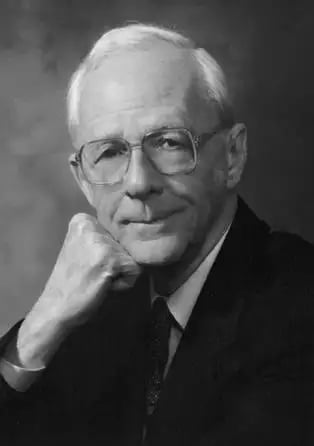
Forrester’s study concluded that “the limits to growth on this planet will be reached sometime within the next one hundred years” if current growth trends in the five variables were to continue unchanged. Due to very savvy public relations, The Limits to Growth Report became “an international event before it reached the public”32 and gained great exposure through presentation at the UN Environment Conference in Stockholm in 1972. The Report was widely criticised as ‘more alarmism’ and computer “garbage in, garbage out” but its influence “spread rapidly. It pushed governments, academic circles and international institutions to confront questions they had long avoided: resource scarcity, environmental degradation and the fragility of global economic assumptions.”33 It was able to do this through the extensive network of elite contacts it had amassed since that first meeting between King and Peccei. Peccei often said that the Club of Rome was “not an organisation of power, but of thought and conscience”. Fine words, but it was only able to make its way and gain its funding influence through a powerful elite network that operated behind the scenes and through the method of what can be called ‘shock therapy’ – a literally ‘shocking’ response to what would later be called “the shock of the new” (Robert Hughes, 1980), in this case the accelerating pace of technological change in the period 1945-1965. Certainly, after the early death of the charismatic Peccei in 1984 (King died in 2007), it lost momentum, which it didn’t regain until the 2010s. But it had lit a fire in the years 1968-1972, which was in itself a dramatic, revolutionary but deeply unstable era, by creating a ‘shock’ with The Limits to Growth Report, overdramatising a crisis and calling for sudden drastic and essentially undemocratic action from the top-down, from elites, corporations, national governments and the UN, aimed to mandate and push whole populations into directions determined by the programmes of academics and technocrats using computer models. It was the first such attempt at ‘shock treatment’ and has been followed by various others, the most recent of which was the combination in 2020, of the globally coordinated COVID-19 ‘shock’ (preceded by the “Event21” planning exercise at Johns Hopkins University in New York in October 2019) with the “Great Reset” of the World Economic Forum declared by the then Prince Charles and Klaus Schwab.
The Club of Rome and Anthroposophy
What has the Club of Rome to do with Anthroposophy, “the wisdom of man”? Both the Club and the Anthroposophical Society and movement were founded by Europeans, and Europe is in the middle of the world, between East (Asia) and West (America), between the nightmare and the spectre, as it were. We can ask ourselves: which is the preferable way forward, between Scylla and Charybdis here? The intellectual way of the European elitists King and Peccei, and their American computer assistants, which leads inexorably toward a future controlled by A.I. and has little or nothing to say about the spirit except platitudes? Or the way of a movement that arose from the cultural depths of Europe and seeks to unite the spiritual in man and the spiritual in the universe by effective and practical means?
In 1917-1918 Rudolf Steiner tried to gain a hearing from members of the elite of the German-speaking world for his ideas about the “threefold social organism” (made up of autonomous but associating spheres of law and politics, economics, and spiritual/cultural activities in society), ideas which he felt could not only, in a healthy way, end the ongoing war but also shape the future. It was a ‘top-down’ attempt to get the ideas across and it failed; the members of the elite who Steiner engaged with did not have the imagination to see what he was driving at nor the courage to grasp the creative nettle he was offering them. He then turned in 1919 to the public and launched a vigorous public campaign of activism which went on until 1922, at which point he called it off, feeling that the historical moment for any receptivity to threefolding had passed and would not likely return for a hundred years. The mental habits of the majority of the public, like those of the elite, had not shifted sufficiently from those of the pre-war years, despite all the terrible pain and suffering of the war. From 1922 he would focus on developing and strengthening Waldorf education and the Anthroposophical movement. After Steiner’s death in 1925, the talented and energetic British anthroposopher and industrialist Daniel Dunlop in Britain, in the World Power Conferences he organised, tried, indirectly, to introduce certain anthroposophical approaches again in a ‘top-down’ way via the elite, as Steiner had tried in 1917-1918, but the Great Crash and consequent Depression – events brought on by the financial elite themselves34 for far-reaching aims – and Dunlop’s own death in 1935, prevented his efforts from bearing fruit35, although the World Power Conference is still with us, renamed in 1968, in the form of the UN-aligned World Energy Council. There are some anthroposophers today who feel that the way, or a way ahead for the Anthroposophical movement is to collaborate with the Club of Rome and other such elite groups, as Daniel Dunlop and others tried to do. If one looks at the photos of the full-time members of The Club of Rome on its website today (https://www.clubofrome.org/members/), the very first photo one sees is that of an anthroposopher from Egypt. I contend, however, that collaboration with such groups is misguided, for reasons which I hope this article has made clear. This does not mean that Daniel Dunlop’s efforts for the World Power Conference were misguided; by the time he embarked on them in 1922, he had already been working in the electrical energy sector since 1896 and in 1911 he helped to set up British Electrical and Allied Manufacturers’ Association (BEAMA), which still exists today. This was a very particular area in which he knew well what he was about and who were the main figures involved. He was well aware that it is the nature, quality, and intention of those with whom one is working that counts in human and progressional relations. He was a skilled and very tactful man. Seeking to collaborate at the level of a group like the Club of Rome, however, with its links untransparent power structures, and its grand ideas about changing the world through complex, multi-vector systems dynamics and “global revolution” in the almost desperate hope that Anthroposophy, through such collaboration and with such people, can change the world for the better – this is another matter altogether.
Peccei’s 1965 speech focused on technology more than human beings. Jay Forrester, the man who the Club of Rome in 1970 commissioned to do their global computer model for them, wrote that computerised system models to inform social policy were superior to human discussion and debate, which he said were “dominated by inexact mental models”: “The mental model is fuzzy. It is incomplete. It is imprecisely stated. Furthermore, within one individual, a mental model changes with time and even during the flow of a single conversation. The human mind assembles a few relationships to fit the context of a discussion. As the subject shifts so does the model. When only a single topic is being discussed, each participant in a conversation employs a different mental model to interpret the subject. Fundamental assumptions differ but are never brought into the open. Goals are different and are left unstated. It is little wonder that compromise takes so long. And it is not surprising that consensus leads to laws and programs that fail in their objectives or produce new difficulties greater than those that have been relieved.”36 There is a direct line from such thinking in 1971 to today’s ‘A.I.’ debate. What Forrester said then could be said by an ‘A.I.’ machine today. The logic of Forrester’s argument would lead to the replacement of human discussion and decision-making in social policy. It wasn’t possible in 1971, but we’re getting much closer to it today – if we continue to ignore the kind of incisive observations Steiner made about human thinking over 130 years ago in his Philosophy of Freedom and instead speak enthusiastically about “machine intelligence”.

In 1991 the Council of the Club of Rome published a Report written by Alexander King and Bertrand Schneider that was intended as a blueprint for the 21st century and a follow-up to The Limits to Growth. It was dramatically titled The First Global Revolution,37 which was something Aurelio Peccei had always advocated was needed to solve what he called “le problematique” – the tangle of complex problems facing modern humanity. The Foreword to The First Global Revolution was preceded by the Fabian Society’s quote from the Rubaiyat of Omar Khayyam which is at the beginning of this article; the Foreword was followed by an encouraging message to a 1988 conference of the Club of Rome by the late Prince Philip, Duke of Edinburgh. The book offered “le résolutique” to “le problematique”. In Chapter 5 titled ‘The Vacuum’ – about the decline of politics, democracy and governance in the modern world, we find these words: “historically, social or political unity has normally been motivated by common enemies”, […] In the [late 20th century] vacuum [i.e. after the end of the Cold War] such motivations seem to have ceased to exist – or have yet to be found. […] The need for enemies seems to be a common historical factor. […] Can we live without enemies? […] In searching for a common enemy against whom we can unite, we came up with the idea that pollution, the threat of global warming, water shortages, famine and the like, would fit the bill. In their totality and their interactions these phenomena do constitute a common threat which must be confronted by everyone together. But in designating these dangers as the enemy, we fall into the trap, which we have already warned readers about, namely mistaking symptoms for causes. All these dangers are caused by human intervention in natural processes, and it is only through changed attitudes and behaviour that they can be overcome. The real enemy then is humanity itself.”38 (emphasis – TB) This was The Club of Rome’s answer to the problem of “the vacuum” in modern life.
The Fabian Society was named after the Roman general Quintus Fabius Maximus Verrucosus, nicknamed Cunctator, meaning the “Delayer”, for his slow approach to defeating the Carthaginian general Hannibal by avoiding battle and instead, wearing Hannibal’s army down. The Fabian Society, like the Marxists, wanted revolution but they wanted to bring it about gradually, unnoticed by the population until it was too late. Many of the early Fabians were members of the British elite, middle and upper-class intellectuals. They wanted to conspire together, so as to “grasp the society around them and gradually “shatter it to bits” – from the top down, and then, remould it nearer to …not so much their hearts’ desire as their heads’ intention”. Is this not what the founders of the Club of Rome and the Klaus Schwabs of this world have also wanted, only at a rather faster pace?
Notes
1 In a lecture of 29.11.1918, Rudolf Steiner, Collected Works, GA 186.
2 https://www.theguardian.com/world/2002/apr/07/1
3 See n.1.
4 See n.1.
5 See n.1.
6 www.etymonline.com
7 https://www.gutenberg.org/cache/epub/19229/pg19229-images.html p.288
8 geometrically i.e. in the ratio of 1, 2, 4, 8, 16, 32, 64, 128, 256, 512, etc. arithmetically i.e. in the ratio : 1,2,3,4,5,6,7,8,9,10 etc.
9 Full title: On the Origin of Species by Means of Natural Selection, or the Preservation of
Favoured Races in the Struggle for Life. Darwin declared that it had been his reading of
Malthus’s famous book of 1798 which had given him the original idea for his book
10 Social Darwinism – the application of Darwin’s ideas in biology and zoology to the human
social sciences. Usually associated with the British polymath Herbert Spencer (1820-
1903) who, inspired by Darwin’s Origin of Species, used the phrase ‘survival of the fittest’
instead of ‘natural selection’.
11 R. Steiner, lecture of 28.10.1917 in The Fall of the Spirits of Darkness, Collected Works, GA 177
12 The Roman Republic’s public symbol was SPQR: Senatusque Populus Romanus – The Senate
and People of Rome. The emperors, a third pseudo-monarchical element, were a later
addition to this dual nature of Rome. The US tripartite system: President – Congress –
Supreme Court is loosely based on the three Roman elements and in the House of
Representatives the Roman symbol of the magistrates’ official power (imperium), the
fasces (a bundle of sticks with or without an axehead) is on the wall alongside the chairs
of the Speaker and Deputy Speaker.
13 Jacopo Bonasera, ‘‘Green’ Malthus? A Bibliographical Itinerary between neo-
Malthusianism and Environmentalism’ at:
https://storicamente.org/bonasera_green_malthus
“The late Nineteenth-century Conservation movement, led by future President Theodore
Roosevelt, had built his social and political success on the idea that nature and its resources
were key to the greatness of the Nation, so they must be exploited while protecting their
ability to regenerate and flourish”, in Jacopo Bonasera, ‘‘Green’ Malthus? A Bibliographical
Itinerary between neo-Malthusianism and Environmentalism’ at
https://storicamente.org/bonasera_green_malthus
14 https://storicamente.org/bonasera_green_malthus
15 https://storicamente.org/bonasera_green_malthus
16 https://geneticliteracyproject.org/2026/03/31/how-liberal-paul-ehrlichs-1970s-
population-bomb-panic-helped-shape-todays-anti-immigration-ideology/
17 Ibid.
18 https://public.archive.wsu.edu/hughesc/public_html/tragedy_of_commons.htm
19 Organisation for Economic Cooperation and Development, founded in 1961 to promote economic growth in the capitalist world. Its HQ is the Château de la Muette, a former Rothschild family mansion (1921), in Paris. It was site of the Montgolfier brothers’ first manned balloon flight (9 km) in 1783.
20 Aurelio means ‘golden’; Peccei is an unusual Italian surname from northern Italy – he was
born in Turin, Piedmont, the region from which modern Italy was united – and relates to
the fir tree Pecia (spruce) found in that region of northern Italy (Piedmont) and Italian-
speaking Switzerland (Ticino, where there is a village Peccia, the symbol of which is a fir
tree.). Peccei worked for much of his life for FIAT in Italy and Argentina, and later also for
Alitalia and Olivetti, three of Italy’s top companies.
21 EIR magazine 13 April, 1982, pp. 46-47.
22 Ibid.
23 Ibid.
24 Ibid.
25 Cardinal Franz König (1905-2004). He was the cardinal who suggested Polish archbishop
Karol Wojtyła for Pope in 1978, after the very suspicious death of Pope John Paul I on 29.
Sept.1978. Wojtyła, the first non-Italian Pope for 455 years, was elected and became Pope
John Paul II. A man of both conservative and liberal views, König worked to improve
relations between the Vatican, Freemasons, Communists and the eastern Orthodox church.
26 See n.21.
27 R. Steiner lec. of 9.12.1916, in Collected Works, GA 173.
28 https://thetechnocratictyranny.com/PDFS/Clubofrome_dossiers.pdf p.5
29 Ibid.
30 https://www.clubofrome.org/blog-post/history-foundation/
31 Ibid.
32 Ibid.
33 https://www.clubofrome.org/wp-content/uploads/2026/01/History-of-the-Club-of-
Rome.pdf p.11
34 Notably Montagu Norman, the powerful, longstanding Governor of the Bank of England,
and his friends and close allies Benjamin Strong, who headed the US Federal Reserve, and
the German central banker, Hjalmar Schacht. See Conjuring Hitler (2005) ch. 4, by the
economic historian, G.G. Preparata.
35 In 1932, 33 years before the speech by the Italian Peccei which would lead to the
founding of the Club of Rome, Dunlop even wanted to organise a World Economic
Conference in Rome with the cooperation of Mussolini. See T.H. Meyer, D.N. Dunlop –
A Man of Our Time (2014), pp. 186-187.
36 Jay Wright Forrester (1971) ‘Behavior of Social Systems’, in Theory and Decision, Vol. 2,
December 1971, pp.109-140.
37 https://archive.org/details/the-first-global-revolution-report-club-di-
roma/page/n1/mode/1up
38 https://archive.org/details/the-first-global-revolution-report-club-di-
roma/page/75/mode/1up